

Best Mattress for Combination Sleepers (2026 Guide)

Updated: 4 days ago

If you toss and turn all night, you might assume you're a combination sleeper. But before you start shopping for the “best mattress for combination sleepers,” there's a more important question to ask:
Have you always tossed and turned, or did it start as your mattress got older and less comfortable?
Not everyone who changes positions throughout the night is a true combination sleeper. Sometimes you're moving because your body is trying to escape pressure, pain, poor support, or an old mattress that simply isn't doing its job anymore.
I've experienced this myself. Over my years working with mattress customers, I've learned that the reason you're changing positions may be just as important as which positions you sleep in.
Quick Take: What Combination Sleepers Really Need
A true combination sleeper naturally moves between two or more sleeping positions throughout the night. For these sleepers, I generally prioritize:
Good pressure relief without excessive sinking
Enough support to keep the spine reasonably aligned
A responsive surface that's easy to move on
A firmness level that accommodates the sleeper's dominant positions
However, if you're waking up repeatedly because of shoulder pain, hip pressure, back discomfort, numbness, or general soreness, you may have a different problem. You may not need a better mattress for combination sleeping; you may simply need a better mattress.
Need a mattress shortlist for the positions you move between at night? The free mattress consultation gives you 3–5 mattress recommendations instantly, with no email required.
Are You Really a Combination Sleeper—or Are You Just Uncomfortable?
This is where a lot of mattress advice gets it wrong. Someone says, “I toss and turn all night,” and immediately gets labeled a combination sleeper. I don't think it's that simple.
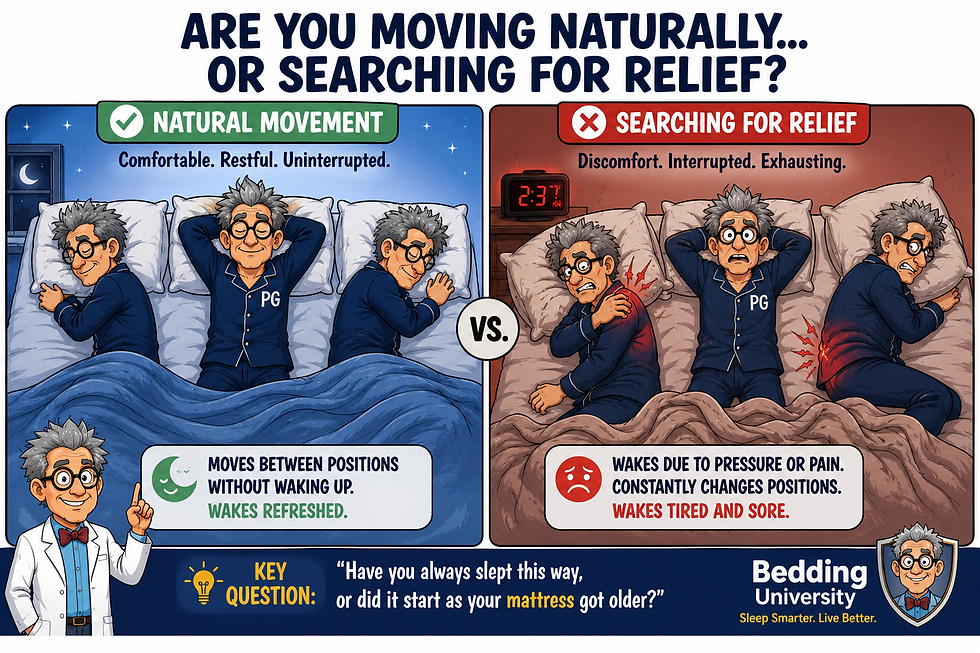
A natural combination sleeper may move from side to back or stomach without repeatedly waking up or feeling uncomfortable. Changing positions is simply part of how that person sleeps.
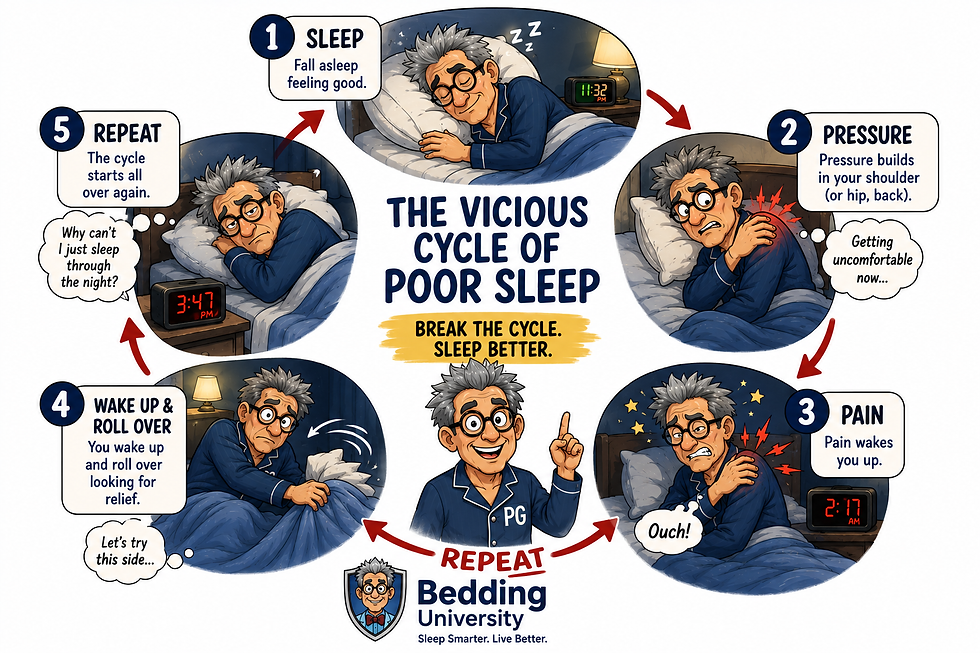
Discomfort-driven tossing and turning is different. Your shoulder starts hurting, so you roll over. Your hip gets sore, so you move again. Your lower back starts bothering you, so you search for another position. You fall back asleep—and eventually, the cycle starts again.
Comparison: Natural Combination Sleeper vs. Discomfort-Driven Tossing and Turning
Natural Combination Sleeper | Discomfort-Driven Tossing and Turning |
Has changed positions for years | Tossing and turning developed or worsened over time |
Usually moves without fully waking | Frequently wakes because of discomfort |
Generally comfortable in multiple positions | Constantly searches for relief |
Wakes reasonably refreshed | Often wakes tired, sore, or stiff |
Movement is part of normal sleep | Movement is a reaction to pressure or pain |
The most important question may be the simplest one: Have you always slept this way? If the answer is no, look more closely at what's changed. Your mattress may be older, its comfort layers may have broken down, or your own body and sleep needs may have changed.
From the Sales Floor: The Question I Would Ask First
When someone tells me they're a combination sleeper because they toss and turn all night, one of my first questions is: Have you always slept that way?
If the answer is no, I start looking at the mattress. How old is it? Is it sagging? Are the comfort layers worn out? Are you waking with sore shoulders, hip pain, numb arms, or lower-back discomfort?
Sometimes people aren't changing positions because that's their natural sleep style. They're changing positions because their mattress isn't giving them the pressure relief or support they need anymore.
And I learned this lesson personally—courtesy of Mrs. Goodsleep Number Two.

The Night Mrs. Goodsleep Number Two Sent Me to the Spare Bedroom
Way back when I was with Mrs. Goodsleep Number Two—I'm currently on Mrs. Goodsleep Number Three, so apparently I've done a little tossing and turning in life as well as in bed—I got kicked into the second bedroom.
The mattress in there was an old pillow top that had seen better days. I tossed and turned all night, changing positions constantly and waking up six or eight times. But I wasn't changing positions because that's how I naturally sleep.
I was changing positions because my shoulders were killing me. The old pillow top wasn't providing the pressure relief I needed anymore. I'd fall asleep in one position, pressure would build in my shoulder until it became uncomfortable enough to wake me up, and then I'd roll over looking for relief. A little while later, the same thing would happen again.
Sleep. Pressure. Pain. Wake up. Roll over. Repeat. Six or eight times a night.
There's a huge difference between spending eight hours in bed and getting eight hours of good, restful sleep. When I sleep well, I wake up refreshed and ready to go. When I'm waking repeatedly because I'm uncomfortable, morning feels completely different. You're tired, groggy, and hitting the snooze button five times just trying to convince yourself to get out of bed.
That's why I think we need to be careful about automatically calling someone a combination sleeper just because they move around a lot. Sometimes the problem isn't your sleep style; sometimes the problem is your mattress.
Why an Old Mattress Can Make You Toss and Turn
Mattresses don't necessarily fail all at once. You don't always wake up one morning to find a giant crater in the middle of the bed. Often, the decline is gradual.
Comfort foams soften. Pillow tops compress. Materials lose some of their ability to distribute pressure. Support can become less consistent. Because it happens slowly, you may adapt without realizing what's going on.
Maybe you wake once or twice at first. Then three or four times. Eventually, you start thinking, “I guess I'm just a restless sleeper.” Maybe. But maybe not.
Signs Your Mattress May Be Contributing to the Problem
Waking with shoulder or hip pain
Numb or tingly arms or hands
Lower-back soreness or stiffness
Sleeping better on a different mattress
Visible sagging or body impressions
Noticeably softened comfort layers
Increasing tossing and turning
Repeatedly waking because something hurts
One of the biggest clues is change. If you used to sleep soundly but now move constantly, don't automatically assume your sleep style changed. Look at your mattress too.
What Does a True Combination Sleeper Need in a Mattress?
If you've always naturally slept in multiple positions, then yes—you may genuinely be a combination sleeper. The challenge is finding a mattress that works reasonably well across your different positions.
A mattress that's excellent for stomach sleeping may be too firm for your shoulder when you're on your side. Conversely, a deeply contouring mattress that's comfortable for side sleeping may allow too much sinking when you roll onto your stomach.
That's why there is no single perfect firmness for every combination sleeper. You have to consider your body weight, your dominant sleeping positions, and how much time you spend in each position.
A 130-pound side-and-back sleeper has very different needs from a 250-pound back-and-stomach sleeper. The term “combination sleeper” alone doesn't tell me enough to recommend a mattress.
Your Dominant Sleep Position Still Matters
If you spend 70% of the night on your side and 30% on your back, I wouldn't choose a mattress primarily for back sleeping. Your side-sleeping needs should probably carry more weight.
Primary Combination and Priorities
Side + Back: Pressure relief with good underlying support
Back + Stomach: Firmer support and less excessive sinking
Side + Stomach: Pressure relief without letting the hips sink too deeply
All Three Positions
Responsive, balanced comfort with moderate contouring.
This is why I don't love oversimplified advice that says every combination sleeper should buy a medium-firm mattress. Medium-firm can be a reasonable starting point, but it isn't a universal answer.
Responsiveness Matters More Than Many Combination Sleepers Realize
If you're someone who naturally changes positions throughout the night, you probably don't want to feel trapped in your mattress.
Traditional slow-response memory foam can provide excellent pressure relief, but depending on the mattress and sleeper, deeper contouring can make changing positions require more effort.
I've talked about this on the sales floor for years: Memory foam tends to absorb you, while latex tends to push back against you.
That's an oversimplification, but it's a useful way to describe the difference in feel. Slow-response memory foam gradually conforms around the body, whereas latex responds almost immediately, with more bounce and pushback, often making movement feel easier and more natural.
Memory Foam, Latex, or Hybrid: What's Best?
Memory Foam: Can be excellent for pressure relief, particularly for side-and-back sleepers. The trade-off is that very slow-response or deeply contouring foam can make some sleepers feel restricted when changing positions.
Latex: One of my favorite materials for sleepers who want pressure relief without feeling stuck. It responds quickly and generally makes position changes easier. The trade-off is that not everyone likes its buoyant feel, and some latex mattresses can feel firmer than expected.
Hybrid Mattresses: A good hybrid can balance comfort layers with the responsiveness and support of individually wrapped coils. However, the term “hybrid” alone doesn't guarantee quality; the comfort layers, coil system, firmness, and overall construction still matter.
Professor Goodsleep's Recommendation
If you're a combination sleeper, don't shop based on that label alone. Ask yourself:
Which positions do I actually sleep in?
Which position do I spend the most time in?
Am I moving naturally, or am I waking because something hurts?
Have I always tossed and turned, or did it get worse as my mattress got older?
Do I like sleeping on top of my mattress, or do I prefer sinking into it?
Those answers tell me far more than simply saying, “I'm a combination sleeper.”
Don't Confuse Easy Movement With Good Sleep
A responsive mattress that makes it easy to roll over can be great for a natural combination sleeper. However, if you're rolling over every 30 or 45 minutes because your shoulder hurts, simply making it easier to move doesn't solve the underlying problem. You still need adequate pressure relief.
Too firm, and pressure can build at the shoulders and hips. Too soft, and you may sink excessively and lose support.
The goal isn't to find a mattress that helps you toss and turn more efficiently. The goal is to find one comfortable enough that you don't need to keep searching for relief all night.
What About Couples Who Are Both Combination Sleepers?
If both partners change positions frequently, motion isolation may become more important—especially if one person is a light sleeper.
A mattress with individually wrapped coils can help reduce motion transfer compared with older interconnected coil systems, while memory foam generally does a good job absorbing movement. However, balance matters: you don't want excellent motion isolation if one partner feels trapped every time they try to roll over.
For couples, I would prioritize enough pressure relief for both sleepers, good responsiveness, reasonable motion isolation, strong edge support, and a firmness that works with both people's body weights and dominant positions. If two sleepers have dramatically different needs, a split-firmness option may be worth considering.
How to Test a Mattress If You're a Combination Sleeper
Don't lie on a mattress for 30 seconds, bounce on it twice, and declare victory. Spend time in each position you actually use at home.
Pay attention to your shoulders and hips while side sleeping. Does pressure begin to build? On your back, does your lower back feel supported? Can you roll from one position to another naturally, or do you feel like you're climbing out of a hole?
And don't forget your pillow. Ideal pillow height can change between side, back, and stomach sleeping, so sometimes what feels like a mattress problem can be partly related to improper pillow height.
Frequently Asked Questions
What firmness is best for combination sleepers?
There is no universal best firmness. Medium to medium-firm mattresses often provide a reasonable balance for many combination sleepers, but body weight and dominant sleeping positions matter significantly.
Is memory foam good for combination sleepers?
It can be. Memory foam provides excellent pressure relief, but very slow-response or deeply contouring foam may make movement more difficult for some sleepers.
Is latex good for combination sleepers?
Yes. Latex's quick response and buoyant feel can make it particularly suitable for sleepers who change positions frequently.
Why do I toss and turn all night?
There are many possible causes, but your mattress may be one of them. If you're waking because of shoulder pain, hip pressure, back discomfort, or numbness—and especially if the problem has worsened as your mattress has aged—your sleep surface deserves a closer look.
How do I know if I'm a true combination sleeper?
Ask whether you've always naturally slept in multiple positions or whether frequent movement developed alongside discomfort, pain, or an aging mattress.
Final Thoughts: Don't Just Count How Many Times You Roll Over
If there's one thing I want you to take from this article, it's this: the number of times you change positions doesn't necessarily make you a combination sleeper. The reason you're changing positions matters.
Some people naturally sleep in multiple positions. Others are moving because a shoulder hurts, a hip is sore, the lower back is uncomfortable, or an aging mattress is no longer providing the pressure relief or support it once did.
I've been there myself: six or eight awakenings, sore shoulders, constant position changes, and poor-quality sleep. In my case, I hadn't suddenly become a combination sleeper. The old pillow-top mattress in Mrs. Goodsleep Number Two's spare bedroom simply wasn't giving me the pressure relief I needed anymore.
So before you shop for the best mattress for combination sleepers, ask yourself one question: Have I always slept this way—or is my mattress trying to tell me something?
If you are still comparing mattresses for more than one sleeping position, use the free mattress consultation to narrow your shortlist.
Don't Worry, Sleep Happy.
Professor Goodsleep
Related Articles:




Comments