

Why Do My Arms Go Numb While Sleeping? Causes, Mattress Pressure, and What to Do

Updated: 4 days ago

Waking up with a numb arm can be unsettling. Your hand may tingle, your fingers may feel asleep, or your entire arm may feel “dead” until you change position and the sensation slowly returns.
Sometimes the explanation is simple: you have been lying on an arm, keeping an elbow bent, or holding a wrist in an awkward position. But recurring numbness can also involve a compressed or irritated nerve at the neck, shoulder, elbow, or wrist—or another medical condition that has nothing to do with your mattress.
A mattress and pillow can affect pressure and sleeping posture. They cannot diagnose or treat a nerve disorder. This guide will help you understand what your sleep setup may be contributing, what patterns to notice, and when numbness deserves medical attention.
Professor Goodsleep is a mattress expert, not a physician. This article provides general education and is not a medical diagnosis.
The Quick Answer
Your arm may go numb while sleeping because prolonged pressure or an awkward position temporarily affects a nerve. Sleeping with an elbow or wrist sharply bent can also aggravate certain nerve-compression problems. A pillow that holds your neck at an angle or a mattress that creates concentrated shoulder pressure may contribute to the position—but neither is automatically the underlying cause.
According to MedlinePlus, numbness and tingling can have many causes, including remaining in one position, nerve injury, pressure on nerves, reduced blood supply, vitamin deficiencies, medications, and several medical conditions.
If the numbness happens repeatedly, affects both sides, worsens, continues during the day, or comes with weakness, it should not be dismissed as “just the mattress.”
Could your mattress be contributing to the problem?
If pressure, firmness or poor support may be involved, answer a few questions and see which mattresses better fit your body and sleeping position.
Free • About 2 minutes
Why Do My Arms Go Numb When I Sleep on My Side?
Side sleeping can place direct pressure beneath the shoulder or upper arm while also keeping the elbow bent, the wrist folded, or the lower arm trapped beneath the body or pillow. Any of those positions may irritate or compress a nerve long enough to produce temporary tingling or numbness.
A mattress that is too firm for your shoulder can concentrate pressure and make it harder for a broad-shouldered sleeper to settle into a neutral position. A mattress that is too soft or worn out can create a different problem by allowing the torso to sag and changing the position of the neck and shoulder. Neither pattern proves that the mattress is the underlying cause.
If feeling returns soon after you change position, the episode may be positional. If it keeps happening, affects both arms, lasts into the day, or comes with weakness, neck pain, poor coordination, or dropped objects, it deserves medical evaluation.
The numbness pattern can provide a clue
Whole arm after lying directly on it:
Little finger and part of the ring finger:
Thumb, index, and middle fingers:
Both arms or symptoms that persist after getting up:
These patterns are observations to share with a clinician, not a way to diagnose yourself.
My Firsthand Experience: The Johnny Bravo Shoulder Story
My daughter used to call me “Johnny Bravo” because I have always been built wider through the shoulders and narrower through the hips. That body shape became more important than I realized once I started sleeping primarily on my side.
In my late 30s, I developed persistent pain in my left shoulder. I worked out regularly, so I blamed weightlifting. When it continued, I started wondering whether it was simply part of getting older. I tolerated it for about six months.
Then the pain shifted to my right shoulder.
That was the moment the light bulb came on. A gym injury does not usually decide to leave one shoulder and move to the other. I began paying closer attention to what happened while I slept instead of looking only at what I did during the day.
Along with the shoulder pain, there were nights when I woke up with an arm tingling, completely numb, or feeling dead until I changed position and the sensation returned. At the time, I did not connect those episodes with my shoulder pain or with the amount of pressure underneath my shoulder. I simply knew that my arm had fallen asleep again.

My mattress was more than ten years old. It had lost the pressure relief I needed and felt too firm beneath my shoulder when I lay on my side. The problem was not that I needed the softest mattress available. I needed enough cushioning for my broad shoulder to sink in without allowing the rest of my body to collapse out of alignment.
I went back into mattress stores and tested different beds while paying close attention to my shoulder. Instead of lying on my back for a minute and declaring a mattress comfortable, I stayed on my side long enough to notice whether pressure was building. I compared how well each mattress allowed my shoulder to settle while still supporting my waist, side, and hip.
I ultimately chose a plush hybrid. It gave my shoulder room to sink while the support system kept the rest of my body from dropping too deeply. The improvement was not instantaneous, but my shoulder pain disappeared in about a month. I joke that us old people heal slowly, but the experience permanently changed how I fit side sleepers.
I cannot prove that every numb-arm episode came from that mattress. What I can say is that the numbness, shoulder pain, body position, and lack of pressure relief were happening together. That is why I now ask side sleepers about tingling and numbness—not only pain—when we discuss how a mattress feels beneath the shoulder.
One morning, the alarm clock was going off and the arm underneath me was so completely asleep that I couldn't use it—or even get myself rolled off it—to reach the clock. For more than a minute I was stuck there, trying to turn over while the alarm kept blaring. Mrs. Goodsleep finally lost patience and whacked me with a pillow. It was funny afterward, but in the moment it showed just how numb and useless that arm could become.

Why an Arm or Hand May Go Numb at Night
“Numb arm” describes a symptom, not one specific condition. The location of the pressure and the fingers affected can provide useful clues, but only a qualified healthcare professional can diagnose the cause.
Direct pressure from your sleeping position
Lying directly on an arm or keeping it pinned under your torso or pillow can compress body tissues and irritate a nerve. Remaining in one position for a long time is one recognized cause of temporary numbness and tingling.
If the sensation returns quickly after you move, the episode may have been positional. Repeated episodes still deserve attention, especially when they are becoming more frequent or severe.
A bent elbow and the ulnar nerve
The ulnar nerve travels from the neck into the hand and is especially vulnerable around the inside of the elbow. The American Academy of Orthopaedic Surgeons explains that prolonged elbow bending can aggravate ulnar nerve compression and may cause people to wake with numb fingers.
Tingling in the little finger and the adjacent half of the ring finger is commonly associated with this nerve. That pattern is a clue to discuss with a clinician, not a diagnosis you should make from an article.
A bent wrist and the median nerve
Carpal tunnel syndrome involves pressure on the median nerve at the wrist. AAOS notes that nighttime symptoms are common, partly because many people sleep with their wrists bent.
Numbness or tingling involving the thumb, index, middle, and part of the ring finger can fit this pattern. Hand weakness, clumsiness, or dropping objects makes professional evaluation more important.
A nerve problem originating in the neck
A compressed or irritated nerve in the cervical spine can cause pain, tingling, weakness, or numbness that travels from the neck into the shoulder, arm, or hand. AAOS describes cervical radiculopathy as one possible source of these symptoms.
A pillow or mattress may alter neck position and aggravate an existing problem, but replacing a mattress does not treat the underlying condition.
Other possible causes
Numbness can also be associated with diabetes, vitamin deficiencies, medication effects, circulation problems, thyroid disease, neuropathy, injury, and other conditions. This is why a recurring symptom should not be blamed on bedding without considering the larger picture.
How Your Mattress May Contribute
A mattress can change how pressure is distributed and how your neck, shoulder, torso, and hips settle into the bed. That makes it relevant to comfort and sleeping position, but not a universal explanation for numbness.
A health-technology review in the NCBI Bookshelf found insufficient research supporting medical claims for specific mattresses and found no relevant studies assessing therapeutic bedding for neuropathic pain. The honest conclusion is that a better-fitting mattress may reduce an aggravating pressure or posture problem, but it should not be presented as treatment for neuropathy or nerve disease.
The mattress may be too firm for your shoulder
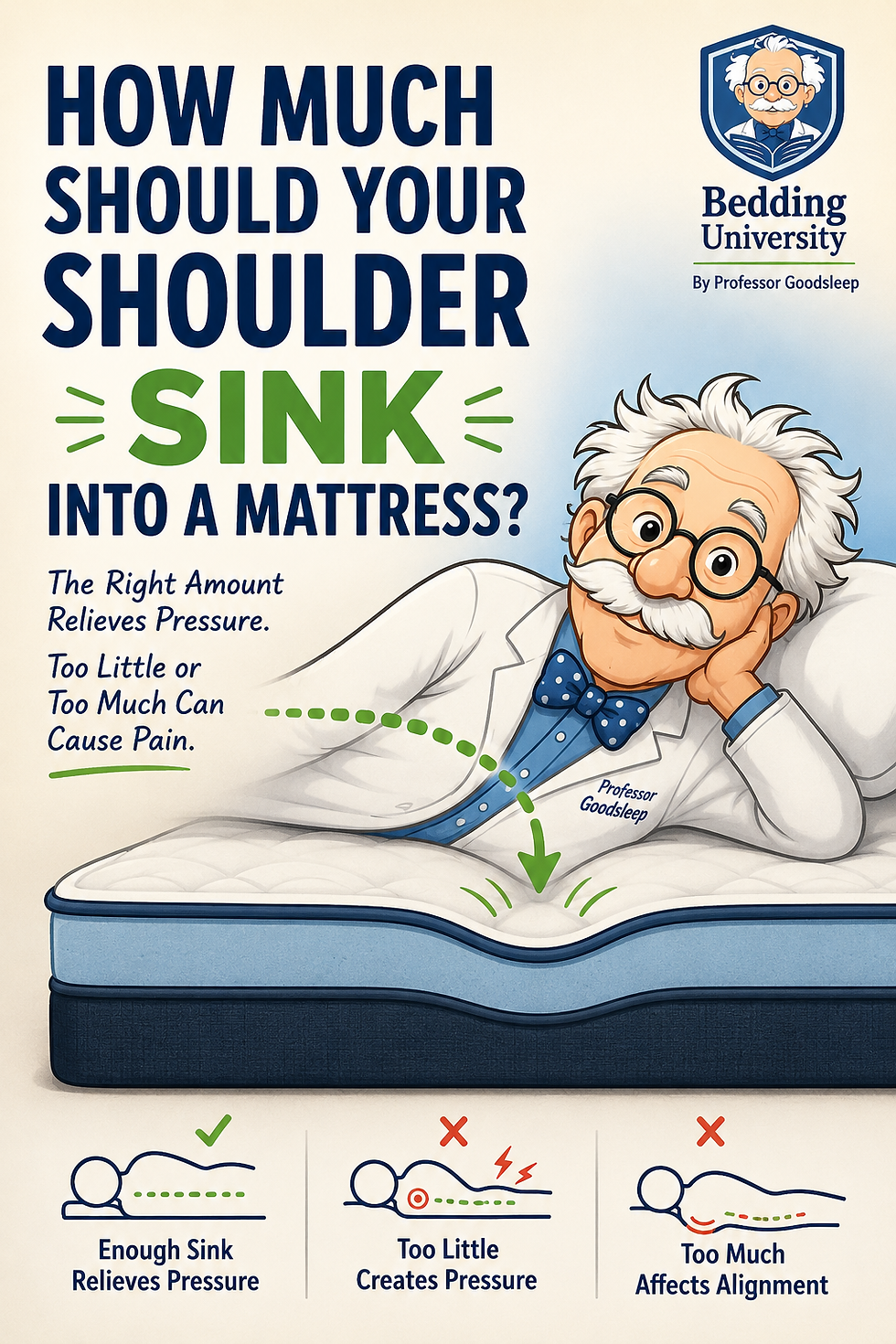
Side sleepers place a prominent part of the shoulder against the sleep surface. If the comfort layers do not allow enough immersion, pressure can become concentrated beneath the shoulder and upper arm. Broad-shouldered and lighter side sleepers often notice this sooner because the mattress may not yield enough for their shape and weight.
The mattress may be too soft or uneven
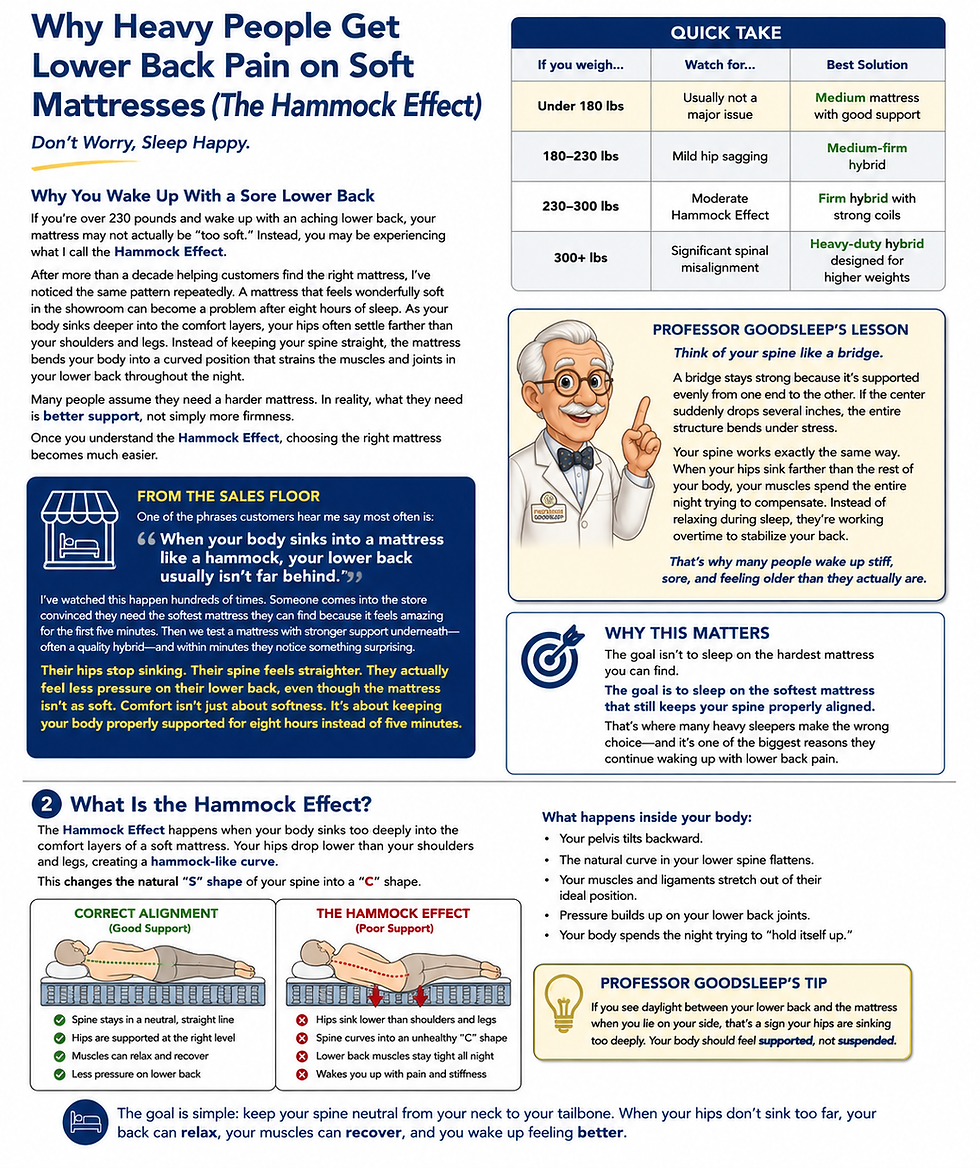
Softer is not automatically better. If your torso and hips collapse too deeply, the shoulder and neck can be held at an awkward angle. A worn depression can also encourage you to roll into the same position repeatedly.
The goal is pressure relief with support—not a particular firmness number.
The mattress may simply be worn out
Foams soften, fibers compress, and support systems lose consistency. An older mattress can feel hard at the shoulder while simultaneously sagging elsewhere. If you sleep better on another suitable bed, improve temporarily after rotating the mattress, or feel an obvious low spot, the mattress deserves closer inspection.
Your Pillow May Matter Just as Much
A side sleeper's pillow must fill the distance between the head and the mattress after the shoulder has settled into the bed.
A pillow that is too low can let the head tilt toward the mattress.
A pillow that is too high can push the head away from the mattress.
A mattress change can alter the amount of pillow height you need because your shoulder may sink more or less deeply.
Stacking pillows can feel supportive initially but create an unstable angle during the night.
There is no universal pillow height. Shoulder width, mattress firmness, body weight, and pillow compression all change the requirement. The practical goal is a neck position that feels neutral rather than sharply tilted.
A Practical Sleep-Setup Check
These steps cannot diagnose the cause, but they can help you collect useful information.
1. Notice exactly where the numbness occurs
Write down whether it affects the whole arm, one hand, or particular fingers. Note which side is involved and whether the symptom continues after you get out of bed.
2. Pay attention to your elbow, wrist, and arm position
Do you sleep with an elbow tightly bent, a wrist folded under your face, or an arm trapped beneath your body? Does changing that position reduce the frequency of the episodes?
3. Check your pillow alignment
Have someone view you from behind while you lie in your normal side-sleeping position. Your head should not be dramatically tilted toward or away from the mattress. This is only a rough visual check, not a medical assessment.
4. Evaluate shoulder pressure
Lie in your usual position for at least ten minutes. Notice whether pressure steadily builds beneath the shoulder, whether you feel forced to roll backward, or whether your hand begins to tingle.
5. Inspect the mattress and foundation
Look for a depression, uneven support, damaged slats, or missing center support. Rotate the mattress only if the manufacturer permits it. A topper may change surface comfort, but it cannot repair a failed support system.
6. Compare your sleep somewhere else
A consistent improvement on another appropriate mattress is more useful than one unusually good night. Compare shoulder comfort, numbness, awakenings, and how you feel the next morning.
How to Test a Mattress When Shoulder Pressure Is the Concern
Do not test only on your back. Spend most of the trial in the position that creates the problem.
Bring or approximate the pillow height you normally use.
Stay on your side long enough for the comfort layers to settle.
Check whether the shoulder can sink without feeling jammed.
Make sure the waist and hip still feel supported.
Notice whether you can change positions without struggling.
Compare several firmness levels instead of assuming plush or firm is automatically correct.
My guide to testing a mattress in ten minutes provides a repeatable showroom process.
For broader side-sleeper guidance, read Best Mattress for Side Sleepers: Finding the Right Balance of Comfort and Support.
When to Seek Medical Care
Call 911 or seek emergency care if numbness begins suddenly, follows a recent head injury, involves an entire arm or leg, or occurs with weakness or paralysis, confusion, difficulty talking, dizziness, or a sudden severe headache. These are among the emergency warning signs identified by the Mayo Clinic.
Schedule a medical evaluation when numbness:
Keeps returning or is becoming more frequent
Worsens gradually or persists after changing position
Occurs on both sides
Continues during the day
Is accompanied by neck pain, weakness, poor coordination, or dropping objects
Interferes with sleep or normal activities
A mattress evaluation and a medical evaluation are not competing choices. You can examine your sleep setup while also asking a healthcare professional to determine why the numbness is occurring.
Frequently Asked Questions
Why does my arm go numb while I am sleeping?
A sleeping position can place prolonged pressure on a nerve or hold the elbow, wrist, shoulder, or neck at an aggravating angle. Recurring numbness can also have medical causes, so position should not be assumed to be the only explanation.
Can a mattress that is too firm make my arm go numb?
A firm or poorly conforming mattress may increase pressure beneath a side sleeper's shoulder and influence arm position. It can be a contributing factor, but numbness can arise from several locations and conditions that a mattress cannot diagnose.
Can the wrong pillow cause arm numbness?
Pillow height can affect neck and shoulder position and may aggravate an existing pressure or nerve problem. A pillow is not necessarily the underlying cause, especially when numbness is persistent or accompanied by weakness.
Why do my ring and little fingers go numb at night?
That pattern can be associated with irritation or compression of the ulnar nerve, particularly when the elbow stays bent. A clinician can determine whether the ulnar nerve or something else is responsible.
Why do my thumb, index, and middle fingers tingle at night?
Those fingers are commonly involved when the median nerve is compressed in carpal tunnel syndrome. The pattern is not enough to diagnose yourself, but it is useful information to share with a healthcare professional.
Why do both arms go numb while sleeping?
Bilateral symptoms can have positional, spinal, neurological, metabolic, or other causes. Because both sides are involved, recurring symptoms deserve medical evaluation rather than being blamed solely on the mattress.
Should I buy a softer mattress?
Not automatically. You need enough cushioning to reduce concentrated shoulder pressure and enough support to maintain a comfortable position. Your shoulder width, body weight, sleeping position, and the construction of the mattress all affect the right balance.
The Bottom Line
Your arms may go numb while sleeping because of body position or pressure, but the mattress is only one possible contributor. The strongest approach is to notice the symptom pattern, check your elbow, wrist, pillow, mattress, and foundation, and seek medical evaluation when the numbness is recurring, worsening, bilateral, persistent, or accompanied by weakness.
My own mattress was part of a real shoulder-pressure problem, and changing to a better-fitting plush hybrid helped me. That firsthand experience taught me to take numbness and tingling seriously during a mattress fitting—but also not to pretend that every numb arm is a mattress problem.
If you are separately shopping for a mattress and comparing surface cushioning with support feel, get 3–5 mattress recommendations instantly with the free consultation. No email is required.
Bedding University is reader-supported. When you buy through links on our site, we may earn an affiliate commission at no extra cost to you.
Don't worry, sleep happy.
Professor Goodsleep


Comments