

Mattress Sagging: Causes, Checks & When to Replace

Updated: 4 days ago
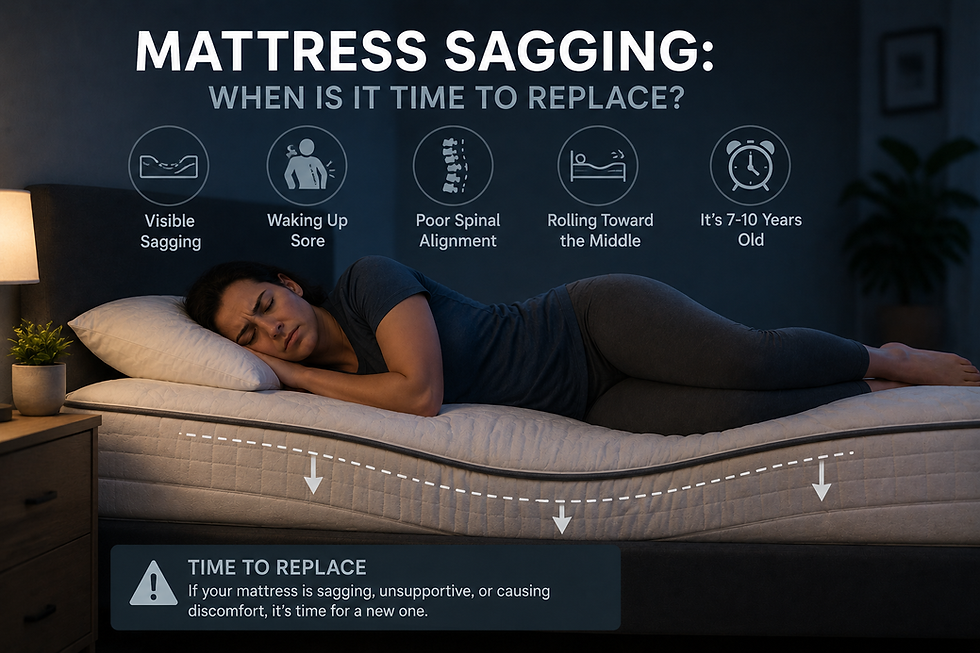
A mattress can lose support in two different ways. It may develop a permanent dip that remains visible when the bed is empty, or its materials may soften so much that they collapse only when you lie down.
The first problem is easier to document. The second can be just as uncomfortable, but it may not qualify as a warranty defect. Before replacing the mattress—or filing a claim—separate true sagging from normal settling and rule out the foundation.
Considering a replacement after checking your mattress for sagging? Build a shortlist with the free mattress consultation: 3–5 mattress recommendations instantly, with no email required.
Sagging, Body Impressions, and Softening Are Not the Same
Sagging
Sagging is a low area caused by a loss of structure or support. It may appear in the center, under one sleeper, or along an edge. The dip can come from worn comfort layers, a damaged support core, or an inadequate base underneath the mattress.
A body impression
Some cushioning materials compress where you sleep most often. A shallow impression can be normal, particularly in mattresses with thick quilted covers or plush comfort layers. It becomes more concerning when it is deep, uneven, uncomfortable, or paired with loss of support.
Softening without a visible dip
Foam can recover when the mattress is empty yet feel dramatically softer under load. You may sink much farther than before, struggle to change positions, or feel that your hips are dropping out of alignment. This is real wear even when a straightedge shows little permanent indentation.
How to Check a Mattress for Sagging
1. Remove the bedding
Strip off the sheets, protector, and topper. Give the mattress enough time to return to its unloaded shape according to the manufacturer's instructions.
2. Inspect the entire surface
Look across the mattress in strong side lighting. Check the center, both sleeping areas, and the edges. Compare the area where you sleep with a less-used section.
3. Use a straightedge
Place a rigid straightedge, level, or taut string across the suspected low spot. Measure vertically from the bottom of the straightedge to the deepest part of the mattress surface. Do not press on the mattress while measuring.
4. Photograph the measurement
Take clear photos that show the entire mattress, the straightedge, and the measurement. Photograph the law tag, foundation, center support, and any damaged components as well. Keep the original files and your proof of purchase.
5. Check the support underneath
Remove the mattress and inspect the platform, slats, frame, legs, and center rail. A bowed slat or missing center support can make the mattress dip. Verify the allowed slat spacing and foundation type in the mattress manufacturer's current instructions.
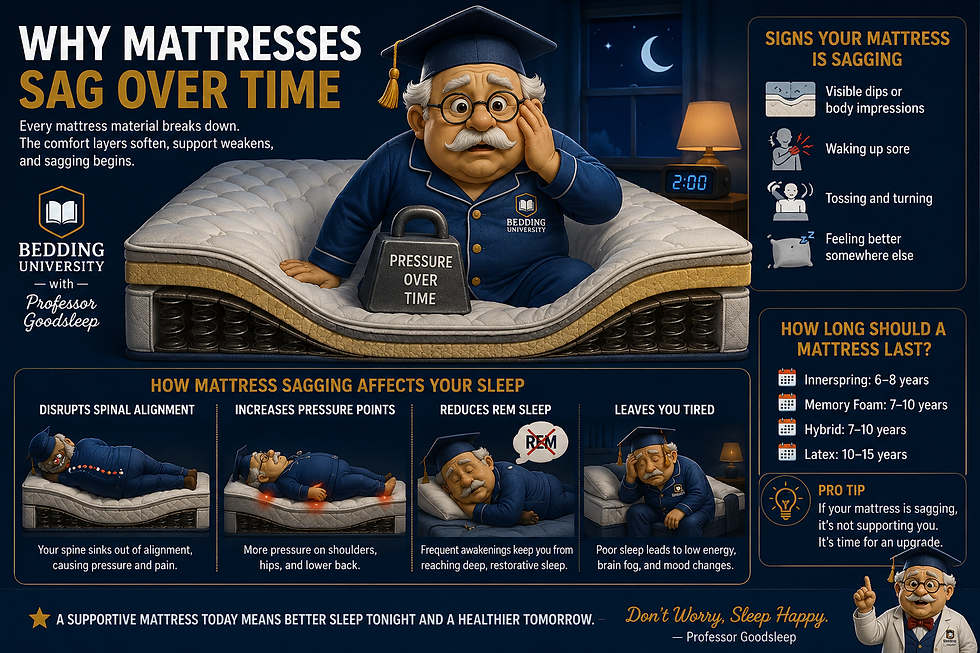
What Causes a Mattress to Sag?
Common causes include:
Comfort foams or fibers compressing with nightly use
A support core that is worn, damaged, or not strong enough for the load
A weak foundation, bowed slats, or inadequate center support
Repeatedly sleeping or sitting in the same area
Using the mattress on a base that does not meet the manufacturer's requirements
Moisture, excessive heat, or damage that accelerates material breakdown
Body weight affects how quickly materials are stressed, but premature sagging is fundamentally a construction-and-support issue. The right mattress and foundation should be appropriate for the people using them.
Will Rotating or Adding a Topper Fix It?
Rotation may redistribute wear if the manufacturer permits head-to-foot rotation. A short-term improvement after rotation is useful evidence that one area has softened more than another.
A topper can change the surface feel, but it cannot restore a failed support core. It will usually settle into the same depression. Likewise, adding a board or improvised support may mask a foundation problem, reduce airflow, or conflict with warranty requirements. Correct the base properly instead of improvising a permanent patch.
Never flip a one-sided mattress.
When Sagging Means It Is Time to Replace the Mattress
Replacement is reasonable when:
The low spot or uneven support returns after the foundation is corrected
You consistently roll into a depression or struggle to move out of it
The mattress causes repeated pressure, stiffness, or poor sleep
The materials collapse excessively under your body even if they recover when empty
Rotation provides only brief relief
The mattress is outside warranty or the wear does not qualify for coverage
Sagging is only one reason a bed may be finished. For the broader decision, read When Should You Replace Your Mattress? 5 Clear Warning Signs.
To compare the mattress's age with typical durability by construction, see How Long Should a Mattress Last?.
What to Know Before Filing a Warranty Claim
Warranty rules are not universal. The required indentation depth, measurement method, foundation rules, exclusions, and remedy vary by brand and model. Read the warranty that applies to your specific purchase rather than relying on a number from another company's policy.
Many manufacturers require the indentation to be measured with no one on the bed. Normal softening, a change in comfort preference, stains, physical damage, or an improper foundation may be excluded. That does not mean the mattress still works for you; it only means the issue may not meet the written warranty definition.
Frequently Asked Questions
How much mattress sagging is normal?
There is no universal number. A shallow body impression can be normal in some designs, while a deeper permanent indentation may qualify as a defect. Use the threshold and measurement method in your mattress's warranty.
Can a mattress sag without looking saggy?
Yes. Foams can rebound when unloaded and collapse too much under body weight. This is usually described as softening or loss of support rather than a measurable permanent indentation.
Can a topper fix a sagging mattress?
No. A topper may change surface comfort, but it cannot rebuild the mattress's support system and will usually follow the existing depression.
Could the bed frame be causing the sag?
Yes. Bowed slats, excessive gaps, missing center support, or a damaged foundation can create or worsen a low spot. Inspect the support system before replacing the mattress.
The Bottom Line
Measure first, inspect the foundation, and read the exact warranty. A visible indentation is not the only kind of failure, and a mattress that looks flat can still have badly softened materials.
If the support problem is persistent, affects your sleep, and cannot be corrected underneath the bed, replacement is usually the honest long-term solution.
If your checks have led you to start comparing replacement mattresses, use the free mattress consultation to narrow your shortlist.
Bedding University is reader-supported. When you buy through links on our site, we may earn an affiliate commission at no extra cost to you.
Don't worry, sleep happy.
Professor Goodsleep



Comments