
How to Choose a Mattress for Back Pain: A Guide to Spinal Alignment
- Professor Goodsleep

- Jun 1
- 2 min read
Updated: Jul 4

Choosing a Mattress for Back Pain
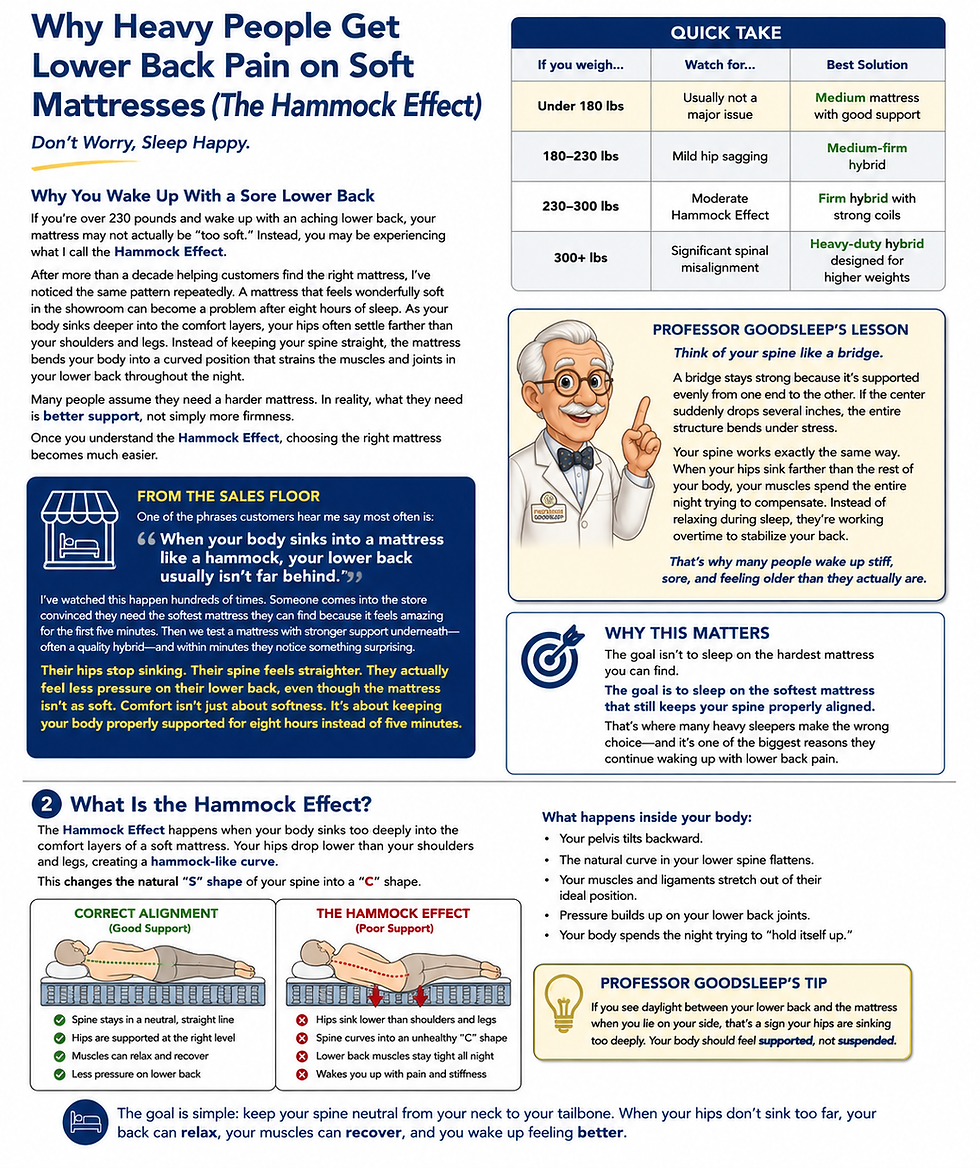
If you wake up with an aching back that fades as you move around during the morning, your mattress is almost certainly contributing to the problem. A mattress that is too soft causes your spine to bow out of alignment, while one that is too firm creates pressure points and forces your lower back into an unnatural arch.
The Myth of the Firm Mattress
For decades, doctors recommended the firmest mattress possible for back pain. Modern sleep science has largely debunked this advice. A landmark study published in The Lancet found that patients who slept on medium-firm mattresses reported significantly less back pain than those on firm mattresses.
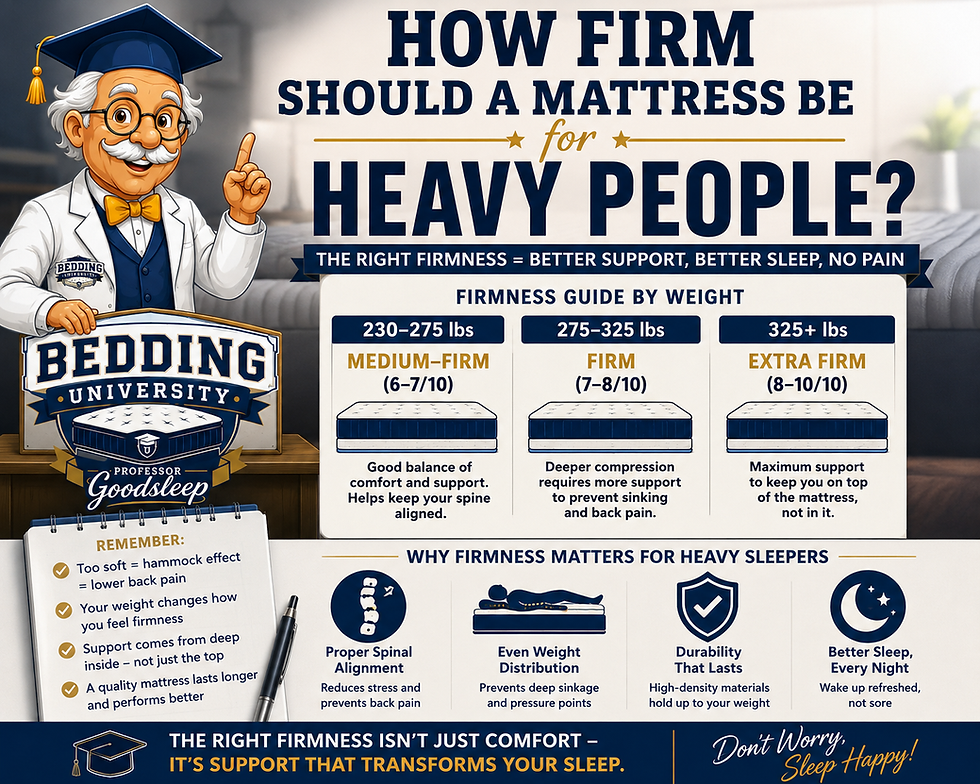
The goal is not firmness — it is neutral spinal alignment. For most people, a medium-firm mattress provides the best balance of support and contouring to achieve this. The ideal mattress keeps your spine in the same natural S-curve it has when you are standing with good posture.
Zoned Support Systems
If you suffer from lower back pain specifically, look for a mattress with zoned support. These beds use firmer coils or denser foam in the center third of the mattress to support the heavier lumbar region, preventing your hips from sinking too deeply and throwing your spine out of alignment.
Recommendations by Sleep Position
Back sleepers generally do best on a medium-firm mattress (5–7 on the firmness scale). The mattress should support the natural curve of the lower back without allowing the hips to sink. A small pillow under the knees can further reduce lumbar strain.
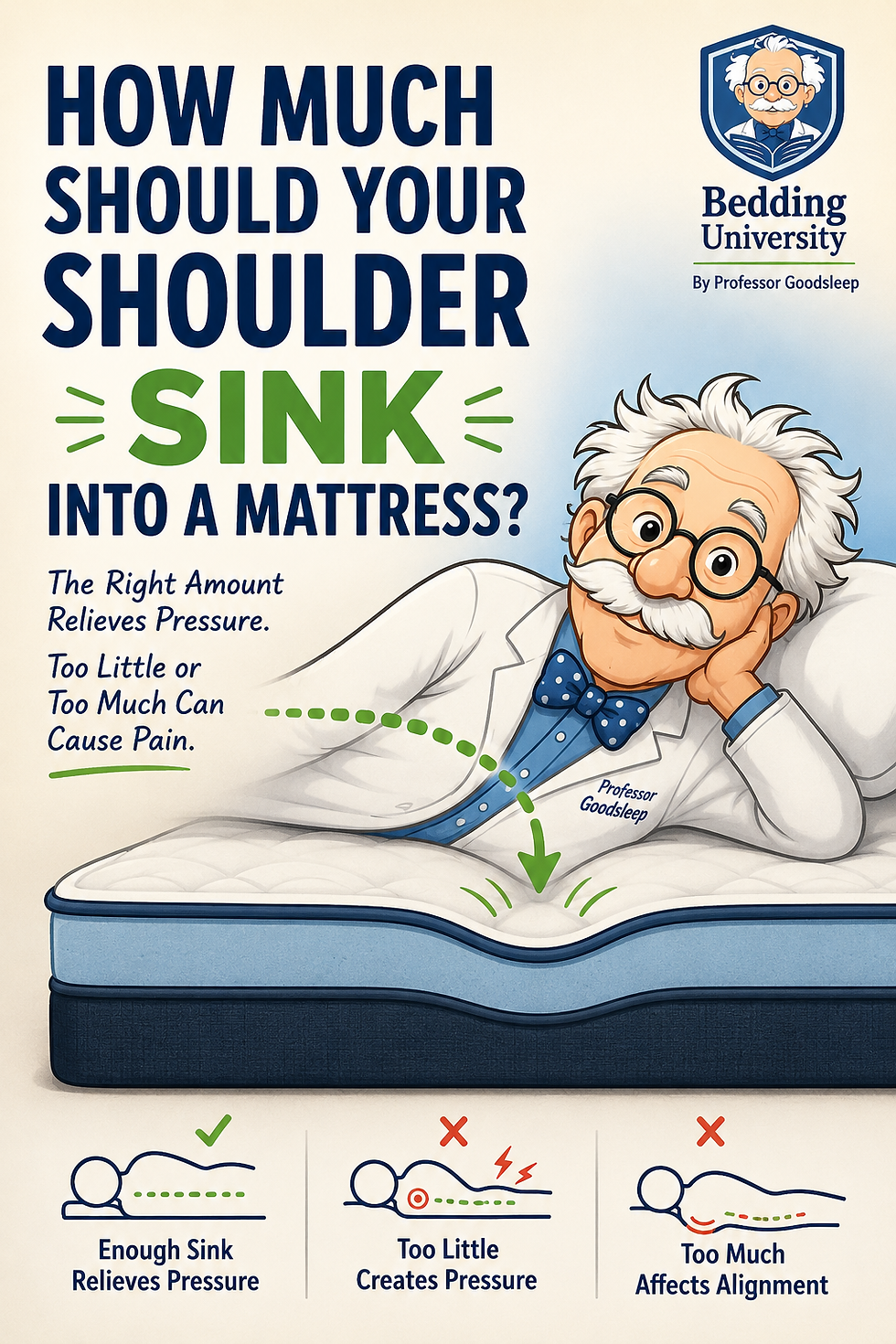
Side sleepers need a slightly softer surface (4–6) to allow the shoulder and hip to sink in, keeping the spine level. Without adequate cushioning at these pressure points, the spine bends laterally, which is a common cause of hip and shoulder pain.
Stomach sleeping is the hardest position on the back regardless of mattress choice, as it forces the neck to rotate and the lower back to arch. A firmer mattress (6–8) helps keep the hips elevated, but switching to side or back sleeping is the best long-term solution.
The Role of Your Pillow
Your mattress and pillow work as a system. Even the perfect mattress will cause neck pain if paired with the wrong pillow height. Side sleepers need a thicker pillow to fill the gap between the ear and shoulder, while back sleepers need a thinner pillow that keeps the head in line with the spine. A pillow that is too low will put more pressure on you shoulder, so if you have shoulder pain you should consider getting a more supportive pillow.
Disclaimer: Bedding University is reader-supported. When you buy through links on our site, we may earn an affiliate commission at no extra cost to you.
Don't worry, Sleep Happy.
Professor Goodsleep
Related Articles:
Comments