
Children’s Mattresses: Why Support and Pressure Relief Matters More Than Most Parents Realize
- Professor Goodsleep

- Jun 13
- 4 min read
Updated: Jul 3

When shopping for a child’s mattress, many parents follow a very common line of thinking:
“They’re kids. They can sleep on anything.”
I understand where that idea comes from. Young children seem to fall asleep in the car, on the couch, on the floor, and sometimes in positions that would leave an adult unable to walk the next morning.
But after spending years helping people find the right mattress, I’ve come to a different conclusion.
In many ways, a quality mattress is even more important for a child than it is for an adult.
Growing Bodies Need Proper Support and Pressure Relief
Children spend a tremendous amount of time sleeping. During those years, their bones, muscles, joints, and posture are constantly developing.
A mattress that lacks proper support and pressure relief can allow the body to sink unevenly, causing the spine to bend out of alignment during the night. While a child may not immediately complain about discomfort, that doesn’t necessarily mean the mattress is providing healthy support and proper pressure relief.
As adults, we often invest in mattresses because we’re trying to eliminate back pain, shoulder pain, or poor sleep. Children may not have those same complaints yet, but they’re spending years growing on whatever surface we provide for them.
That’s why I believe support, proper pressure relief, and spinal alignment should be major considerations when choosing a child’s mattress.
A friend of mine's son who was about 12 complained to his parents every morning before school, begging her to let him sleep in another hour or two. This went on for a couple of years. When they came in to my store to purchase a bed for him, I showed their son a memory foam hybrid and he thought it was very comfortable. His old mattress was too firm for him. The first night he slept on it he asker his Mom if she let him sleep in this morning when she woke him for school. He actually got good sleep and woke up refreshed, feeling like he had slept longer, because he most likely did sleep longer.
Kids Can’t Always Explain What’s Wrong
One thing I’ve noticed over the years is that young children often struggle to communicate why they aren’t sleeping well.
Adults can say:
“My back hurts.”
“My shoulder is sore.”
“I wake up stiff.”
“The mattress feels too firm.”
A four-year-old can’t usually tell you that. Instead, they often express it in a different way.
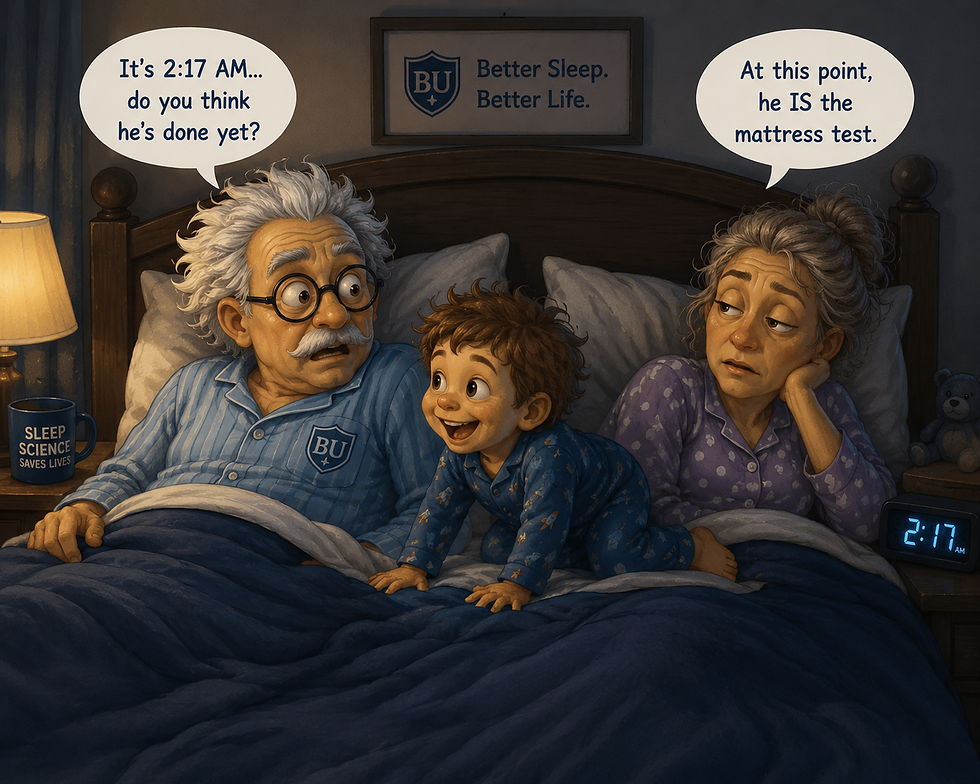
They crawl into bed with Mom and Dad.
Many parents assume the child is simply seeking comfort, attention, or security. While that can certainly be true, I’ve seen plenty of situations where the child consistently prefers the parents’ bed because it’s simply more comfortable.
Think about it. Mom and Dad usually spent more money on their mattress. It’s newer, more supportive, and offers better pressure relief. The child may not be able to explain that their mattress feels hard or uncomfortable, but they know they sleep better somewhere else. If your child repeatedly leaves their bed and ends up in yours, it may be worth taking a closer look at the mattress they’re sleeping on.
Cheap Isn’t Always a Bargain
Children’s mattresses are often viewed as temporary purchases.
Parents know kids grow quickly and may eventually move to a larger bed, so it’s tempting to buy the least expensive option available.
While there’s nothing wrong with being budget-conscious, extremely inexpensive mattresses sometimes sacrifice support, proper pressure relief, durability, and comfort.
A mattress doesn’t need to be expensive to be good, but it should provide:
Consistent support and proper pressure relief
Proper spinal alignment
Adequate comfort
Durable materials that won’t break down quickly
Remember, your child may spend ten or more hours every day on that mattress.
That’s a significant portion of their life.
What Should Parents Look For?
When shopping for a child’s mattress, I generally recommend focusing on support and proper pressure relief first and softness second.
Look for:
A mattress that keeps the spine relatively straight
Quality foam or support materials that also provide proper pressure relief
Good durability ratings
Comfort appropriate for the child’s sleeping position
Side sleepers typically need a little more pressure relief, while back sleepers often do well with a slightly firmer feel that still provides proper pressure relief.
Most importantly, avoid choosing a mattress based solely on price.
Professor Goodsleep’s Final Thoughts
As parents, we naturally want the best for our children.
We buy healthy food, safe car seats, good shoes, and quality school supplies because we know those things matter.
Sleep deserves that same level of attention.
While children may seem capable of sleeping anywhere, they’re also spending their most important developmental years growing and recovering during sleep.
A supportive mattress with proper pressure relief can help provide proper alignment, better comfort, and potentially better sleep quality.
And if it keeps them from showing up in Mom and Dad’s bed every night, that’s just an added bonus.
Don't worry, Sleep Happy.
Professor Goodsleep
Related Articles:


Comments