

9 Simple Habits for Better Sleep

Updated: 4 days ago
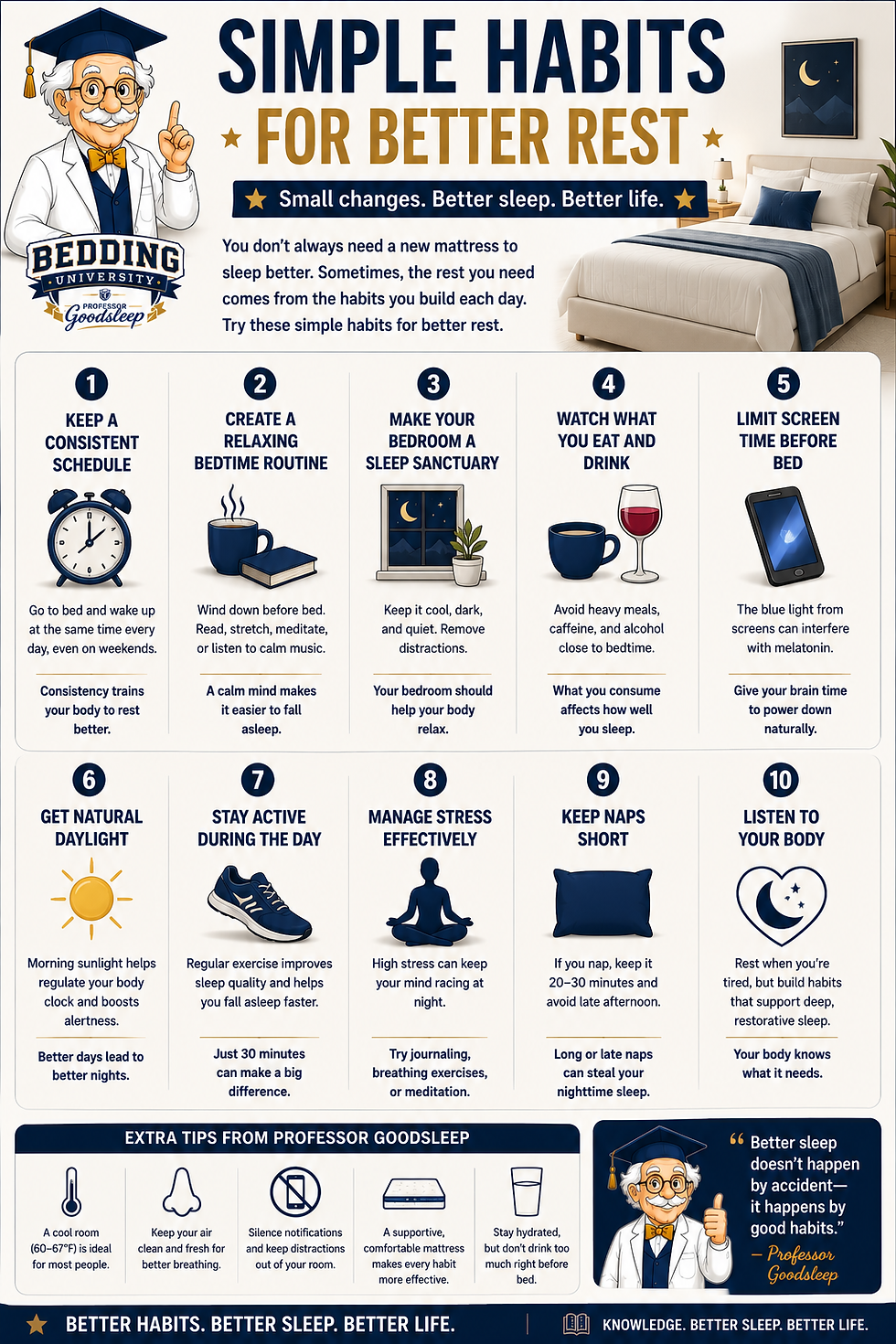
Simple Habits for Better Rest
Most people think better sleep means buying a new mattress and hoping for the best. In reality, great sleep usually starts with small, repeatable habits you can control every day. These simple changes support your body’s natural sleep systems so your mattress can actually do its job.
Below are practical, science‑backed habits you can start tonight—no fancy gadgets required.
1. Set a Consistent Sleep and Wake Time
Your body runs on an internal clock (your circadian rhythm). When your sleep and wake times jump around, that clock gets confused.
Try this:
Pick a bedtime and wake time you can keep 7 days a week.
Aim for no more than a 1‑hour difference on weekends.
Give it 7–14 days; consistency is what trains your body.
Why it helps:
A steady schedule tells your brain when to release melatonin (your “sleep hormone”) and when to boost alertness. That means falling asleep faster and waking up less groggy.
2. Create a 30‑Minute Wind‑Down Routine
You can’t go from “scrolling and stressed” to “deep sleep” in 30 seconds. Your brain needs a glide path, not a crash landing.
Try this 30‑minute routine:
Minutes 0–10: Dim the lights, put your phone on “Do Not Disturb,” and finish any last tasks.
Minutes 10–20: Do something low‑stimulus: light stretching, gentle reading, or journaling.
Minutes 20–30: Bathroom routine, then into bed with a calm activity (breathing, gratitude list, or a short meditation).
Why it helps:
A repeatable routine becomes a cue. Over time, your brain learns: “When I do these steps, sleep is next.”
3. Protect Your Bedroom Environment
Your bedroom should tell your brain one story: “This is where I sleep.” When it doubles as an office, TV room, and storage closet, your brain gets mixed signals.
Focus on three basics:
Darkness
Use blackout curtains or an eye mask.
Cover or turn off bright LEDs (chargers, clocks, TVs).
Quiet
Try earplugs or a white‑noise machine/fan.
If you share a room, agree on a “quiet time” each night.
Most people sleep best around 60–67°F (15–19°C).
If you run hot, use breathable sheets and lighter blankets.
Why it helps:
Your body naturally cools and prefers darkness to enter deep sleep. A calm, cool, dark room makes that process easier.
4. Watch Caffeine and Alcohol Timing
Caffeine and alcohol both interfere with sleep, but in different ways.
Caffeine:
Try to avoid caffeine within 6–8 hours of bedtime.
Remember hidden sources: tea, soda, energy drinks, chocolate.
Alcohol:
Alcohol may help you fall asleep faster, but it fragments sleep and reduces deep and REM sleep.
Aim to stop drinking 3–4 hours before bed, and keep total intake moderate.
Why it helps:
You may still “sleep” with late caffeine or alcohol, but the quality drops—more awakenings, lighter sleep, and less restoration.

5. Get Morning Light and Daytime Movement
Your daytime choices set up your nighttime sleep.
Morning light:
Within 30–60 minutes of waking, get 10–20 minutes of outdoor light (even on cloudy days).
If you can’t go outside, sit by a bright window.
Movement:
Aim for at least 20–30 minutes of movement most days: walking, stretching, or exercise.
Finish intense workouts at least 3 hours before bed.
Why it helps:
Morning light anchors your circadian rhythm, telling your body when “day” starts. Movement builds healthy sleep pressure so your body is ready to rest at night.
6. Build a “Buffer Zone” from Screens
Screens (phones, tablets, TVs) combine two sleep disruptors: blue light and mental stimulation.
Set a screen curfew:
Try a 30–60 minute “no‑scroll” window before bed.
If you must use screens, use night mode and keep brightness low.
Avoid emotionally charged content (news, arguments, work emails).
Why it helps:
Blue light can delay melatonin release, and stimulating content keeps your brain in “problem‑solving” mode instead of “power‑down” mode.
7. Use the Bed Only for Sleep (and Intimacy)
If you answer emails, watch TV, and eat in bed, your brain links the bed with being awake and alert, not sleepy.
Try this rule:
Bed = sleep and intimacy only.
If you’re awake and frustrated for 20–30 minutes, get up.
Do something calm in low light (read, stretch) and return to bed when sleepy.
Why it helps:
This trains your brain to associate your mattress with sleep, which is especially important if you struggle with insomnia.
8. Align Your Mattress and Pillow with Your Body
Habits are powerful, but your sleep surface still matters. The right mattress and pillow support your spine so your muscles can relax instead of working all night.
Quick self‑check:
You wake with stiffness, numbness, or new aches that fade after you get moving.
You toss and turn trying to “get comfortable.”
Your mattress is 7–10+ years old or visibly sagging.
If these sound familiar, your habits may be fighting against an unsupportive sleep surface. That’s where understanding firmness, materials, and alignment becomes key—exactly what Bedding University is built to teach.
9. Start Small and Track What Changes
You don’t need to fix everything at once. In fact, trying to overhaul your entire routine in one night usually backfires.
Pick 1–2 habits this week:
Week 1: Set a consistent wake time and add a 10‑minute wind‑down.
Week 2: Adjust caffeine timing and bedroom temperature.
Week 3: Add morning light and a daily walk.
Keep a simple sleep log:
What time you went to bed and woke up
How long it took to fall asleep (roughly)
How rested you feel in the morning (1–10)
Patterns will show you which habits help you most.
When Simple Habits Aren’t Enough
If you’ve tried these habits consistently for 3–4 weeks and still:
Take more than 30–40 minutes to fall asleep
Wake up multiple times and struggle to return to sleep
Snore loudly, gasp, or stop breathing in sleep (often noticed by a partner)
Feel exhausted no matter how long you’re in bed
then it’s worth talking with a healthcare provider or sleep specialist. Sometimes medical issues like sleep apnea, restless legs, or mood disorders need to be addressed alongside good sleep habits.
Bringing It All Together
Better sleep rarely comes from one magic product. It comes from small, repeatable habits that support your body’s natural sleep systems—plus a mattress and pillow that match your unique body and sleep style.
If you’re ready to go deeper into how your mattress, pillow, and sleep position affect your rest, explore the lessons here at Bedding University. The more you understand your sleep, the easier it becomes to choose the right setup—and wake up actually feeling restored.
If you are also shopping for a mattress while reviewing your sleep setup, get 3–5 mattress recommendations instantly with the free consultation. No email is required.
Don't Worry, Sleep Happy.
-Professor Goodsleep
Related Articles:



Comments