

How Late Can You Drink Caffeine Before Bed?

Updated: 4 days ago
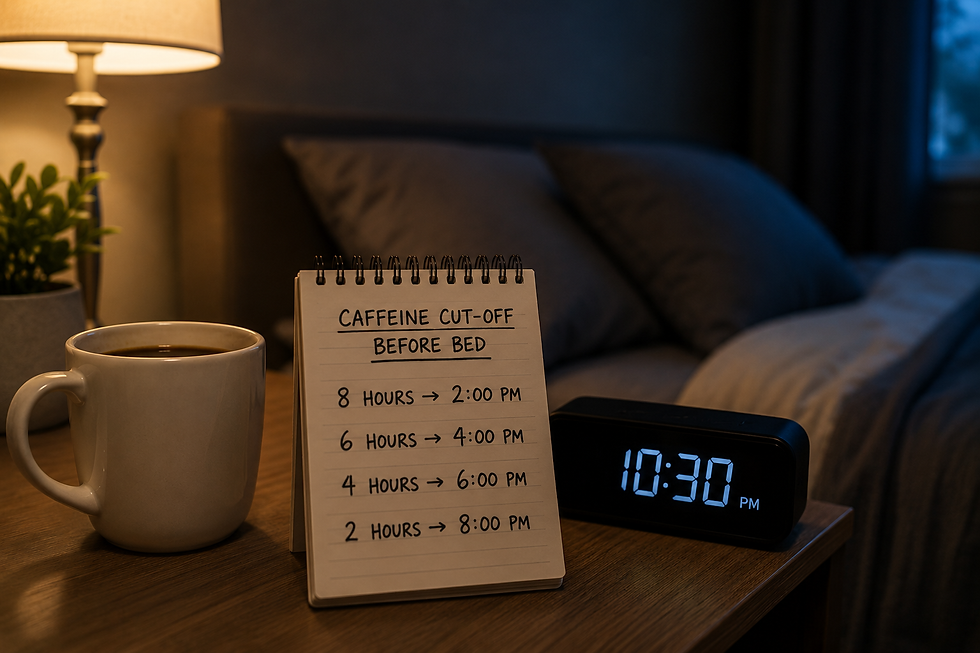
Most people know that caffeine can keep you awake, but many do not realize just how long it stays in your system. If you are struggling to fall asleep at night, that afternoon coffee—or even an evening cup—may be the culprit.
A Real-Life Example
One evening, my wife decided to have a cup of coffee around 8:00 PM. She did not think much of it at the time. That night turned into a long one. Instead of falling asleep at her normal bedtime, she remained awake until nearly 3:00 AM. While not everyone reacts the same way, it was a powerful reminder that caffeine can stay active in your body far longer than most people realize.
My Personal Experience with Caffeine
I have learned firsthand that some people are much more sensitive to caffeine than others. When I was around 30 years old, I drank a Coke almost every morning. Eventually, I noticed that if I had not consumed a Coke by about 11:00 AM, I would develop a headache. This concerned me, so I decided to quit caffeine completely. I experienced a headache for five straight days afterward. That experience taught me how powerful caffeine dependence can become. After that, I avoided caffeine for nearly 20 years. Today, I do drink coffee, but only in the morning. If I consume caffeine later in the day, even in the afternoon, it can remain in my system long enough to make it difficult to sleep that night.
How Long Does Caffeine Last?
The average half-life of caffeine is about 5 to 6 hours. This means a significant amount may still be in your system many hours after your last cup. Genetics, age, medications, and overall health can all affect how quickly your body processes caffeine.
Why Caffeine Hurts Sleep
Caffeine blocks adenosine, a chemical that builds up throughout the day and helps create the feeling of sleepiness. As a result, caffeine can make it harder to fall asleep, reduce deep sleep, interfere with REM sleep, and leave you feeling less refreshed the next morning.
A Simple Experiment
If you are having trouble sleeping, try eliminating caffeine after noon for two weeks. Many people are surprised to discover how much easier it becomes to fall asleep and stay asleep throughout the night.
The Bottom Line
My wife's 8:00 PM coffee that led to a 3:00 AM bedtime and my own experience with caffeine withdrawal taught us the same lesson: caffeine affects everyone differently, but it can have a major impact on sleep. Sometimes, improving your sleep starts with something as simple as moving your last caffeinated drink earlier in the day.
If you are separately shopping for a mattress while reviewing your sleep setup, get 3–5 mattress recommendations instantly with the free consultation. No email is required.
Don't worry, sleep happy.
Professor Goodsleep
Related Articles:



Comments