
Mattress Firmness Guide: How to Choose the Right Feel for Your Sleep Style
- Professor Goodsleep

- Jun 8
- 6 min read
Updated: Jul 4

Introduction
Walk into any mattress store and you will quickly encounter a question that stumps most shoppers: how firm do you want your mattress? Many people answer based on a vague feeling — "I like something in the middle" or "my doctor told me to sleep on a firm mattress" — without really understanding what firmness means or how it affects their sleep.
Firmness is one of the most important factors in mattress selection, yet it is also one of the most misunderstood. This guide will walk you through everything you need to know about the mattress firmness scale, how different firmness levels feel, and how to match firmness to your sleep style, body type, and personal preferences.
Understanding the Mattress Firmness Scale
The mattress industry uses a firmness scale from 1 to 10, where 1 is the softest possible and 10 is the firmest. In practice, most mattresses sold to consumers fall between a 3 and an 8. Here is how the scale breaks down:
1–2: Ultra Soft — Extremely rare in retail. You sink deeply into the mattress with almost no resistance. Not suitable for most sleepers.
3–4: Soft — Sometimes called "plush," these mattresses offer significant contouring and cushioning. You feel a noticeable cradle effect. Best suited for lighter-weight side sleepers.
5–6: Medium — The most popular firmness range. Often labeled "medium" or "medium-soft," these mattresses balance contouring with support. They work well for a wide range of sleepers.
6–7: Medium Firm — Offers more pushback than a medium, with less sinkage. A strong choice for back sleepers and heavier-weight side sleepers who need more support.
8–9: Firm — Minimal contouring. You sleep more "on top" of the mattress rather than "in" it. Preferred by stomach sleepers and those who need maximum spinal support.
10: Extra Firm — Very rare. Essentially no give whatsoever. Typically reserved for medical or therapeutic applications.
It is important to note that firmness ratings are not standardized across the industry. A "medium firm" from one brand may feel noticeably different from a "medium firm" from another. Always test or read detailed reviews before purchasing.
Firmness by Sleeping Position
Your primary sleeping position is the single most important factor in determining the right firmness level. Here is a breakdown of what works best for each position.
Side Sleepers
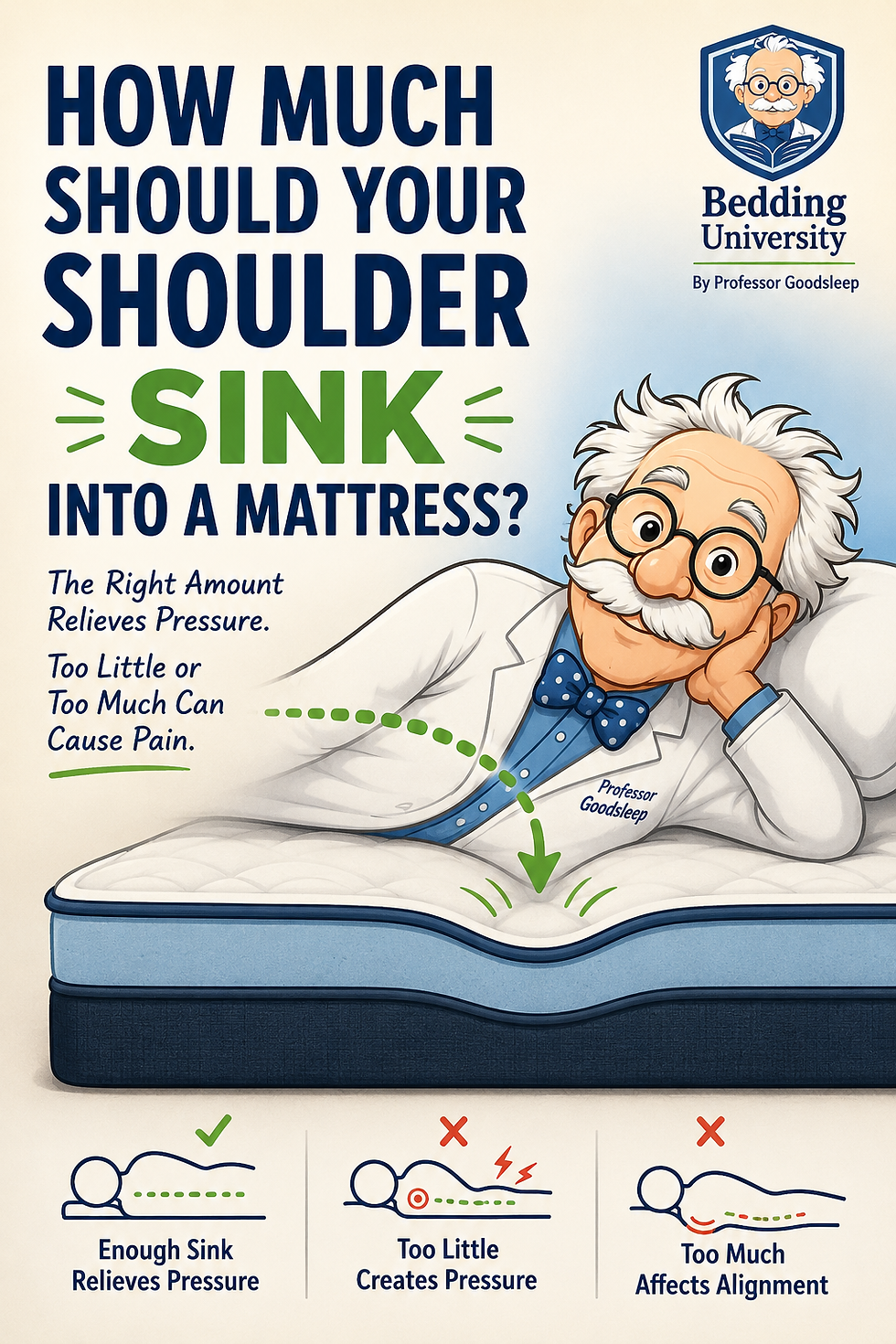
Side sleepers put significant pressure on their shoulders and hips. A mattress that is too firm will not allow these pressure points to sink in enough, leading to pain and discomfort. Side sleepers generally do best on a soft to medium firmness — typically a 3 to 6 on the scale.
I speak from personal experience here. Even on mattresses rated as medium firmness — a 5 or 6 on the scale — I wake up with noticeable shoulder pain after sleeping on my side. For me, nothing short of a plush or soft mattress (a 3 to 4 on the scale) eliminates that discomfort entirely. The shoulder joint needs enough give in the surface to sink in and decompress overnight. When the mattress resists that sinkage, the joint stays compressed for hours, and you feel it the next morning.
This is one of the most common complaints I hear from side sleepers who have been told to buy a medium mattress. They follow the general advice, still wake up sore, and assume the mattress is defective. In most cases, the mattress is performing exactly as rated — it simply is not soft enough for their shoulder anatomy and sleep position. If you are a side sleeper dealing with shoulder pain on a medium mattress, do not hesitate to go softer. A plush or soft option is not a luxury choice — for many side sleepers, it is a necessity.
Heavier side sleepers may need to move toward the medium end of that range to prevent excessive sinkage, which can cause the spine to bow out of alignment. But if shoulder pain is your primary complaint, always prioritize pressure relief over the firmness number on the tag.
Back Sleepers
Back sleeping is generally considered the most spine-friendly position. Back sleepers need a mattress that supports the natural curve of the lumbar spine without allowing the hips to sink too deeply. A medium to medium-firm mattress — typically a 5 to 7 — works well for most back sleepers.
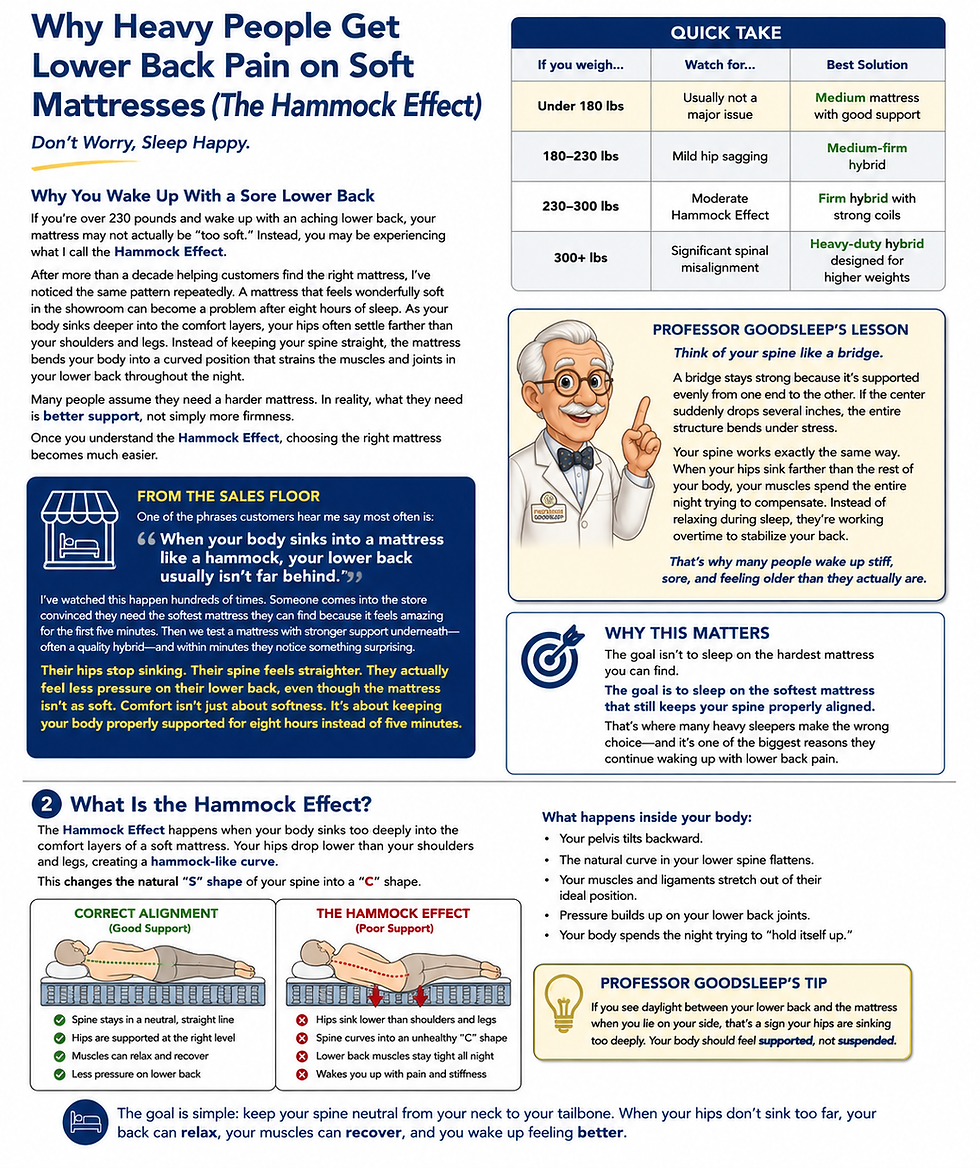
A mattress that is too soft allows the hips to sink, creating a hammock effect that strains the lower back. A mattress that is too firm can leave a gap under the lumbar region, also causing discomfort.
Stomach Sleepers
Stomach sleeping puts the most stress on the spine of any sleep position. The hips and midsection are the heaviest parts of the body, and if they sink into a soft mattress, the spine curves downward into an unnatural position. Stomach sleepers almost universally need a firm mattress — typically a 7 to 9 on the scale.
If you are a stomach sleeper experiencing lower back pain, switching to a firmer mattress is often the first and most impactful change you can make.
Combination Sleepers
If you shift positions throughout the night, a medium to medium-firm mattress — around a 5 to 7 — typically offers the best compromise. It provides enough contouring for side sleeping while offering sufficient support for back and stomach positions.

How Body Weight Affects Firmness Choice
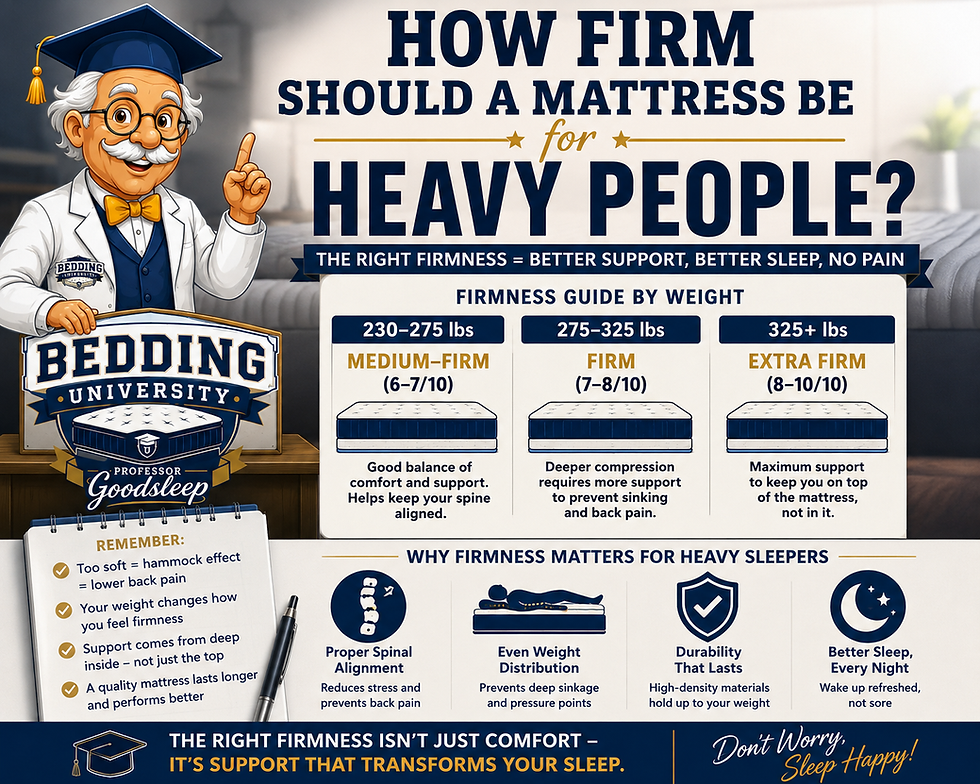
Body weight significantly affects how a mattress feels. A mattress rated as "medium firm" will feel softer to a 250-pound person than it does to a 130-pound person, simply because more weight compresses the materials further.
As a general guideline:
Lighter sleepers (under 130 lbs) — Consider going one level softer than the standard recommendation for your sleep position, as you will compress the mattress less.
Average weight sleepers (130–230 lbs) — Standard firmness recommendations by sleep position generally apply.
Heavier sleepers (over 230 lbs) — Consider going one level firmer than the standard recommendation, and prioritize mattresses with robust support cores and higher-density foams or reinforced coil systems.
Firmness for Couples with Different Preferences
One of the most common challenges in mattress shopping is finding a firmness that works for two people with different preferences or sleep positions. There are a few practical solutions.
Split firmness mattresses allow each side of a king or queen mattress to be a different firmness level. This is the most effective solution when partners have significantly different needs.
Adjustable air beds, such as those made by Sleep Number, allow each partner to independently adjust their side's firmness using air chambers. These are a premium option but offer the most flexibility.
If a split or adjustable option is not in the budget, a medium to medium-firm mattress is typically the best compromise for couples with differing preferences.
Common Firmness Myths — Debunked
Myth: A Firm Mattress Is Always Better for Your Back
This is perhaps the most persistent myth in the mattress industry. The idea that firm equals healthy originated decades ago when mattresses were far less sophisticated. Research has since shown that medium to medium-firm mattresses tend to produce the best outcomes for people with lower back pain — not the firmest option available.
Myth: Softer Mattresses Are More Comfortable
Comfort is entirely subjective and depends on your body type and sleep position. A soft mattress that feels luxurious to a lightweight side sleeper may feel like sleeping in a hammock to a heavier back sleeper. The most comfortable mattress is the one that keeps your spine aligned while relieving your personal pressure points.
Myth: You Can Judge Firmness by Pressing on the Mattress in the Store
Pressing on a mattress with your hand gives you almost no useful information. The only way to properly evaluate a mattress is to lie on it in your actual sleep position for at least five to ten minutes. Your full body weight distributed across the surface tells a completely different story than a quick hand press.
Quick Reference: Firmness Recommendations by Sleep Profile
Side Sleeper, Light Weight (under 130 lbs): Soft to Medium Soft — Scale 3 to 5
Side Sleeper, Average Weight (130–230 lbs): Medium — Scale 4 to 6
Side Sleeper, Heavy Weight (over 230 lbs): Medium to Medium Firm — Scale 5 to 7
Back Sleeper, Any Weight: Medium to Medium Firm — Scale 5 to 7
Stomach Sleeper, Any Weight: Medium Firm to Firm — Scale 6 to 9
Combination Sleeper, Any Weight: Medium to Medium Firm — Scale 5 to 7
Final Thoughts
Firmness is not about personal preference alone — it is about matching the mattress to your body's specific needs. The right firmness keeps your spine in neutral alignment, relieves pressure at your heaviest contact points, and allows you to wake up without pain or stiffness.
Take the time to understand your sleep position, consider your body weight, and test mattresses thoroughly before buying. A few extra minutes of research and in-store testing can make the difference between a mattress that transforms your sleep and one that you regret within a year.
At Bedding University, we believe that an educated shopper is a satisfied sleeper. The more you know before you buy, the better your sleep will be for years to come.
Don't Worry, Sleep Happy.
Professor Goodsleep
Related Articles:
Comments