

How to Compare Mattress Brands: A Buyer’s Checklist

Updated: 4 days ago

Mattress brands all promise the same thing: better sleep, less pain, and “the perfect mattress for everyone.” The problem is, their ads sound almost identical. At Bedding University, we treat this like a research project: instead of chasing logos and slogans, we compare what’s inside the mattress and how it matches your real sleep needs.
Section 1 – Start with You, Not the Brand
Before you compare brands, define your own “sleep profile.” This keeps you from getting lost in marketing.
Key questions:
How do you usually sleep? (side, back, stomach, combo)
Do you run hot or cold at night?
Do you have back, hip, or shoulder pain?
Do you share the bed with a partner or pet?
What’s your realistic budget range?
Once you know this, you’re not asking, “Is Brand X good?” You’re asking, “Is Brand X good for a side sleeper with shoulder pain who sleeps hot and has $1,200 to spend?”
Section 2 – Look Past the Name and Check the Specs
Brands use fancy names for simple things. Focus on the measurable parts:
Foam density and type
Higher-density foams usually last longer and support better.
Memory foam, polyfoam, latex, and specialty foams all feel and age differently.
Coil system (for hybrids and innersprings)
Pocketed coils usually give better motion isolation and targeted support.
Coil count and coil gauge (thickness) matter more than brand slogans.
Comfort layers vs. support core
Comfort layers handle pressure relief (how “plush” it feels).
The support core keeps your spine aligned.
A thick, soft top on a weak core is a short-term fix.
Cover and cooling features
Phase-change materials, breathable covers, and gel infusions can help,
but they don’t replace good airflow and solid core design.
Section 3 – Compare by Category, Not by Hype
Instead of “Brand A vs. Brand B,” compare like this:
All-foam vs. hybrid vs. innerspring vs. latex
Budget tier: under $800, $800–$1,500, $1,500+
Firmness range: soft, medium, medium-firm, firm
Special needs: cooling, pressure relief, extra support, motion isolation
Within each category, line up 2–3 models and compare their specs side by side. This turns a messy brand war into a clean chart.
Section 4 – What Reviews Really Tell You (and What They Don’t)
Online reviews can help, but they’re not a science lab.
Use reviews to spot:
Patterns: “Many people mention sagging after 2 years”
Red flags: “Customer service never replied,” “Warranty denied for obvious sagging”
Real-world feel: “Too firm for side sleepers,” “Great for heavier back sleepers”
But remember:
One person’s “too firm” is another’s “perfect support.”
Extreme reviews (all 1-stars or all 5-stars) can be noisy.
Look for detailed, specific comments, not just star ratings.
Section 5 – Warranties and Trials: Read the Fine Print
Two brands can both say “10-year warranty” and mean very different things.
Compare:
Trial length: How many nights can you actually sleep on it?
Return policy: Is pickup free? Any hidden fees?
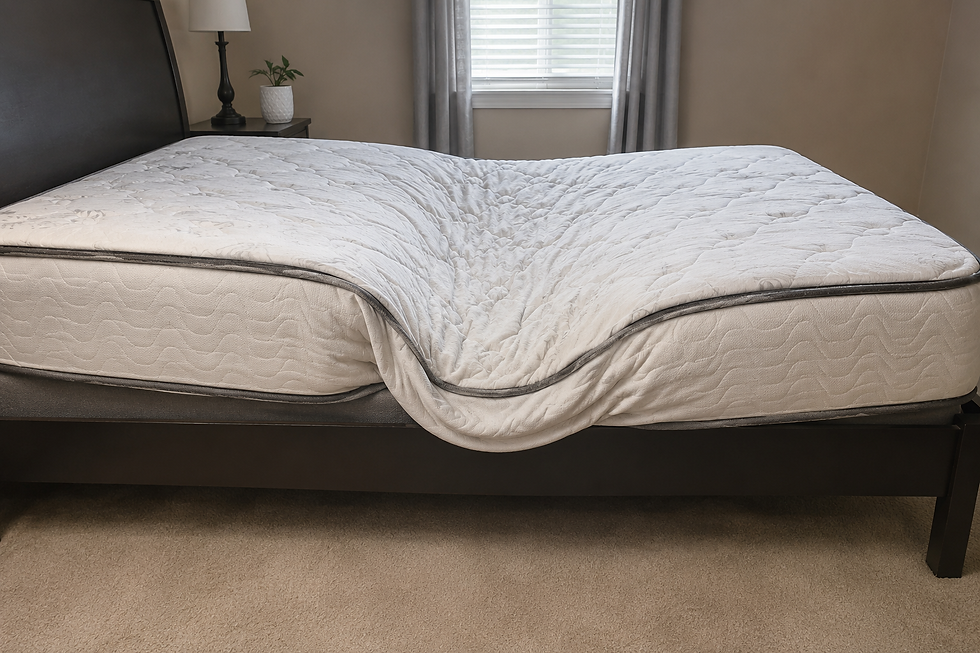
Sagging coverage: How deep does an impression have to be before it’s covered?
Prorated vs. non-prorated: Do you pay part of the cost after a few years?
A generous trial and clear, fair warranty often tell you more about a brand’s confidence than their commercials do.
Section 6 – In-Store vs. Online: How to Test Fairly
If you’re in a store:
Lie in your normal sleep position for at least 10–15 minutes.
Notice pressure on shoulders and hips if you’re a side sleeper.
Have your partner move around to test motion transfer.
Ask for actual specs (foam density, coil type), not just “premium comfort foam.”
If you’re shopping online:
Use the brand’s firmness scale, but also read how real sleepers describe it.
Check if they give real numbers (foam density, coil gauge) or only buzzwords.
Compare at least 2–3 similar models before deciding.
Section 7 – Professor Goodsleep’s Brand Comparison Checklist
When comparing two mattress brands, ask:
Which one matches my sleep position and body type better?
Which one uses higher-quality materials for the price?
Which one has clearer, more honest specs?
Which one has a better trial, return policy, and warranty?
Which one has fewer consistent red flags in reviews?
If a brand looks great in ads but weak in specs, policies, or real reviews, treat that as a warning sign.
Conclusion
Comparing mattress brands doesn’t have to feel like a guessing game. When you focus on your sleep needs, real specs, and clear policies, the “best brand” becomes the one that fits you—not the loudest commercial.
At Bedding University, our mission is to turn confusing mattress marketing into simple, practical sleep education. Use this guide as your comparison checklist, and explore our other lessons on firmness, materials, and support so you can choose your next mattress with calm, confident clarity.
If you would like help turning your brand comparison into a mattress shortlist, get 3–5 mattress recommendations instantly with the free consultation. No email is required.
Don't Worry, Sleep Happy,
Professor Goodsleep
Related Articles:



Comments