
The Health Benefits of Adjustable Bases in Simple Terms
- Professor Goodsleep

- Jun 11
- 3 min read
Updated: Jul 4
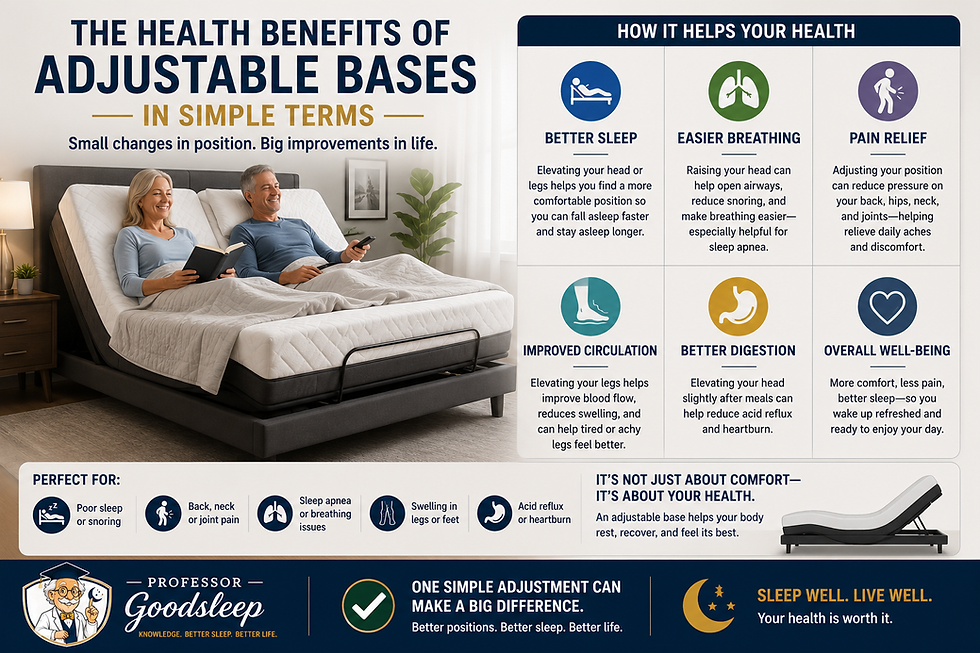
Greetings Greetings, students! Professor Goodsleep here. Today, we’re diving into a bedroom tool that might sound “medical” but is all about comfort and smart body mechanics: the adjustable base.
Why Adjustable Bases Are Gaining Popularity
You might associate adjustable bases with hospitals or nursing homes, but they’re becoming a staple in regular bedrooms. Why? Because they address real-world issues like:
Enhancing sleep quality with personalized positioning
Alleviating back pain through proper spinal alignment
Reducing snoring by elevating the head
Supporting conditions like acid reflux or sleep apnea
Improving circulation and reducing leg swelling
Making reading or watching TV in bed more comfortable
Let’s break this down into simple, practical terms to help you decide if an adjustable base is right for you.
1. Spine and Joint Support: Relief for Back, Shoulder, and Hip Pain
One of the greatest benefits of an adjustable base is its ability to support your spine and joints. Lying flat on a standard mattress can sometimes cause your lower back to arch too much or too little, leading to discomfort.
By slightly raising the head and feet, you can:
Relieve pressure on the lower back
Reduce strain on shoulders and hips
Achieve a more comfortable sleeping position, especially on your back
Professor’s Tip:
To find your ideal “zero-stress” position:
Raise the head by 10–20 degrees.
Elevate the feet by 10–20 degrees.
Adjust gradually and note how your back, shoulders, and hips feel.
2. Breathing Easier: Snoring and Sleep Apnea Support
When lying flat, gravity can push the tongue and soft tissues in the throat backward, narrowing the airway. This can lead to snoring or mild breathing difficulties.
Raising the head of the bed can:
Keep the airway more open
Reduce snoring for some individuals
Make breathing easier for mild respiratory issues
Note: Adjustable bases are not a cure for sleep apnea but can complement CPAP therapy by improving comfort.
Professor’s Tip:
Elevate the head by 10–30 degrees to reduce snoring.
Avoid stacking pillows, as they can strain your neck.
Always follow your doctor’s advice if you have sleep apnea.
3. Managing Acid Reflux and Heartburn
Lying flat can allow stomach acid to move into the esophagus, causing discomfort. Elevating the head of the bed helps use gravity to keep acid in the stomach, reducing symptoms like heartburn and nighttime coughing.
Professor’s Tip:
Raise the head of the bed by 6–8 inches.
Avoid heavy meals or greasy foods 2–3 hours before bedtime.
Track your symptoms to see if elevation helps.
4. Improving Circulation and Reducing Leg Swelling
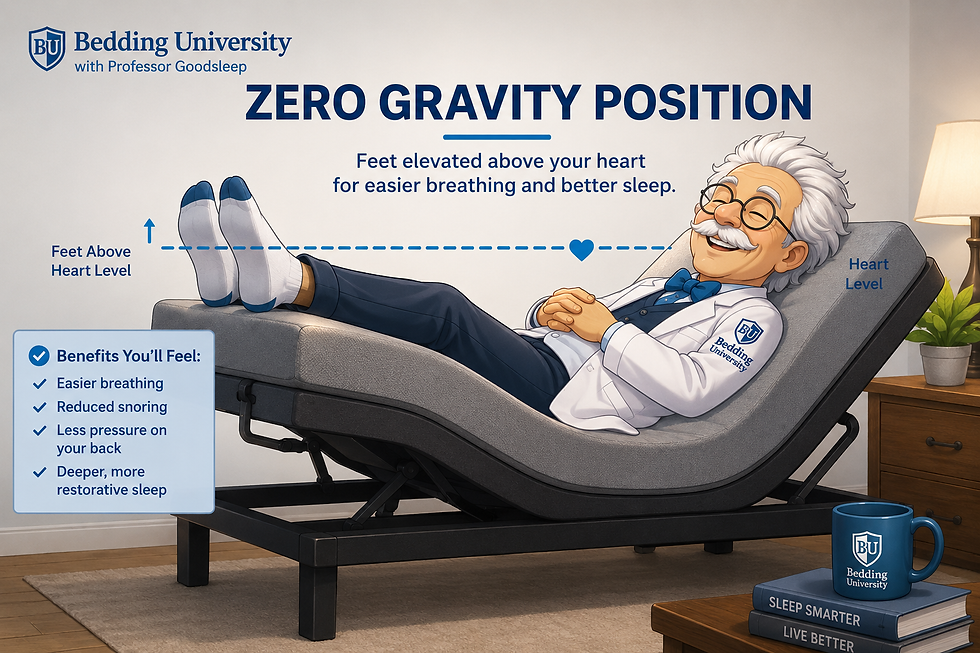
For those with poor circulation or leg swelling, elevating the legs can help fluid move back toward the core of the body. This is especially beneficial for people who stand or sit for long periods.
Professor’s Tip:
Elevate your feet slightly above heart level (if approved by your doctor).
Try this for 15–30 minutes before bed or while relaxing.
Combine with gentle stretches for added relief.
Debunking Myths: Adjustable Bases Are for Everyone
It’s a common misconception that adjustable bases are only for older adults or medical use. In reality, they’re beneficial for:
Younger individuals with back or shoulder pain
Office workers with tight hips or stiff necks
Side or back sleepers seeking better alignment
Couples dealing with snoring or reflux issues
Adjustable bases are tools designed to enhance comfort and support, regardless of age.
A Final Note from Professor Goodsleep
While adjustable bases offer numerous benefits, they are not a replacement for medical care. Think of them as positioning tools that:
Work with gravity to reduce strain
Support better breathing and digestion
Help you find a comfortable, back-friendly posture
Pair your adjustable base with a high-quality mattress suited to your body type and firmness preferences for the best results.
Medical Disclaimer
Adjustable bases are not medical devices. Always consult your doctor before making changes to your sleep setup, especially if you have conditions like sleep apnea, reflux, or circulation issues.
Class dismissed—sleep smart and stay healthy, students!
Don't Worry, Sleep Happy.
Professor Goodsleep
Related Articles:


Comments