

Are Flippable Mattresses Better—or Just Outdated Technology?

Updated: Aug 29

Quick answer: For most people buying a modern primary mattress, I consider flippable construction outdated rather than automatically better. Older two-sided mattresses were thinner, more symmetrical, and commonly paired with true flexing box springs. Today’s mattresses usually place a dedicated support system underneath several inches of comfort material, creating a clear top and bottom. Duplicating those comfort layers on both sides adds weight, material, and cost—and it still does not replace choosing the correct mattress in the first place.
There are legitimate exceptions. A dual-firmness mattress can make sense in a guest room, for a growing child, or for someone whose comfort needs genuinely change. Some specialty models also use one firm side and one extremely firm side for shoppers who already know they want that range. But giving a customer two different guesses is not the same thing as professionally fitting that person for the correct comfort, support, and construction.
My Firsthand View: Fit the Sleeper Instead of Flipping the Mattress
I have spent more than a decade fitting people for mattresses. The entire point of that process is to learn how someone sleeps, where they hurt, how much pressure relief they need, how easily they move, whether they sleep hot, and what type of support keeps them aligned. Then we narrow the choices to the mattress that actually fits them.
A two-comfort mattress sometimes approaches that problem backward: here is a soft side and here is a firm side—use whichever one you like. To me, that is not personalization. It is two possibilities packaged into one bed. Once someone determines which side is comfortable, that is usually the side they continue using. The other side becomes extra material they paid for, carry around, and may never sleep on again.
If the soft side is right for your shoulders, hips, body weight, and sleep position, why would you suddenly need the firm side next month? If the firm side keeps you properly supported, why would you routinely turn it over to a surface that does not fit you as well? Most sleepers need the right mattress—not a mattress that makes them repeat the fitting process after it arrives.
Why Flippable Mattresses Made More Sense Years Ago
Older mattresses also contained innerspring coils, but the overall sleep system was different. Many beds paired a relatively thin, symmetrical innerspring mattress with a true box spring that flexed underneath it. The mattress often had modest padding on both sides, and flipping helped redistribute wear, shifting fibers, and shallow body impressions.
Modern “box springs” are commonly rigid foundations rather than actual spring systems. Meanwhile, the mattress itself has become a more specialized, one-direction structure. A modern hybrid may contain a reinforced coil unit, transition foam, three or four inches of memory foam or latex, cooling materials, and a quilted cover arranged deliberately from the bottom up.
Turning that design upside down would put the comfort system underneath the support core, so a conventional modern mattress is not meant to be flipped. That is not manufacturers forgetting an old durability secret. It reflects the fact that mattress engineering changed.

The 165-Pound Wrestling Match
There is also the question nobody should ignore: who wants to flip one of these things?
Some premium king-size mattresses weigh well into triple digits. Saatva currently lists its flippable king-size Zenhaven at 165 pounds. Layla lists its king-size flippable hybrid at 128 pounds. Those are not decorative throw pillows. They are large, flexible rectangles with no convenient center of gravity, usually wedged between a headboard, nightstands, and a partner who has already decided this was your idea.
Even when a company adds handles, turning a king mattress is not the same as rotating it. You have to strip the bed, pull the mattress away from the headboard, raise it onto an edge, control the weight as it rolls, prevent it from crashing into furniture, and lower it without pinching hands or damaging the foam. For an older adult, someone with back trouble, or one person working alone, this can be completely impractical.
That point deserves more emphasis: not everyone can flip a modern mattress, and many people should not attempt it without help. Strength, height, balance, mobility, grip, room layout, and existing shoulder or back problems all matter. Even two healthy adults can struggle with a 128- to 165-pound mattress because the weight bends, shifts, and fights back while they are trying to control it. A mattress feature is not especially useful if the owner cannot use it safely and independently.
To me, that makes the tradeoff difficult to justify. Better modern construction lets the support core do its job on the bottom and places the appropriate pressure-relieving comfort system on top. You can rotate many of those mattresses to distribute wear without lifting the entire bed onto its edge and turning it upside down. When better technology eliminates the need for that wrestling match, adding a second sleeping surface underneath often creates more work than value.
A feature only improves durability if the owner will actually use it. If flipping requires recruiting two relatives and filing a small construction permit, most people will leave the preferred side facing up.
The Duplicate-Comfort-Layer Problem
A thick, pressure-relieving mattress may use three or four inches of cushioning above its support system. To create a two-sided mattress with a similar feel on both surfaces, the manufacturer must place a comparable comfort package beneath the support system as well.
That creates an obvious tradeoff. You are paying for comfort materials on both sides, adding weight and height even though you sleep on only one surface at a time. The underside is not sitting in a climate-controlled museum waiting for its turn. It remains part of a loaded mattress resting on a foundation while the bed supports one or two sleepers night after night.
In my sales experience, comfort materials are usually where a mattress loses its feel first. Coils can continue functioning while softer, lower-density foams gradually stop providing the same pressure relief and support. Simply adding another comfort package underneath does not guarantee that the mattress will feel new whenever it is flipped.
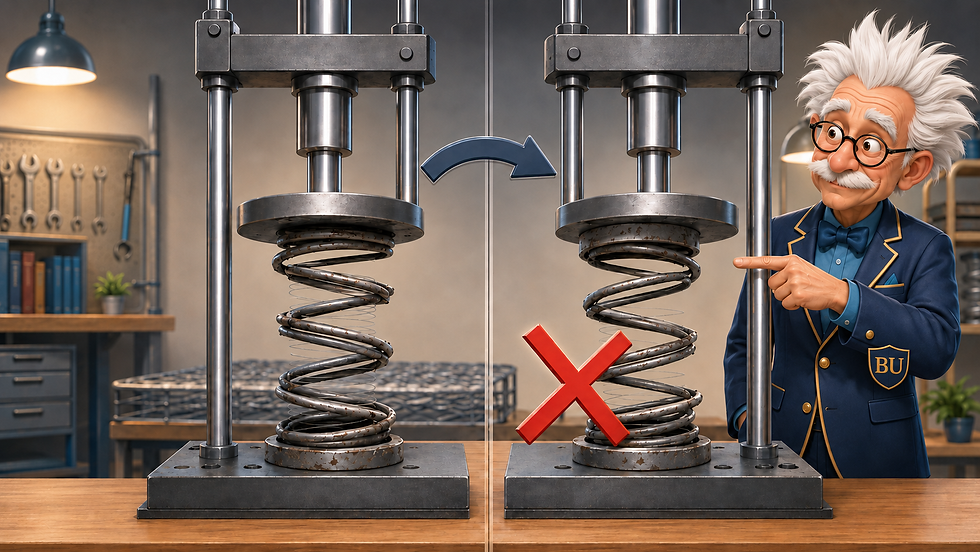
This is especially important with plush mattresses. The more cushioning you add to both sides, the heavier and more complicated the mattress becomes. A firm two-sided mattress with minimal padding is easier to engineer because there is less comfort material to duplicate—but a rock-hard mattress with very little cushioning was already less likely to develop a deep plush impression.
Flipping Is Not the Same as Rotating
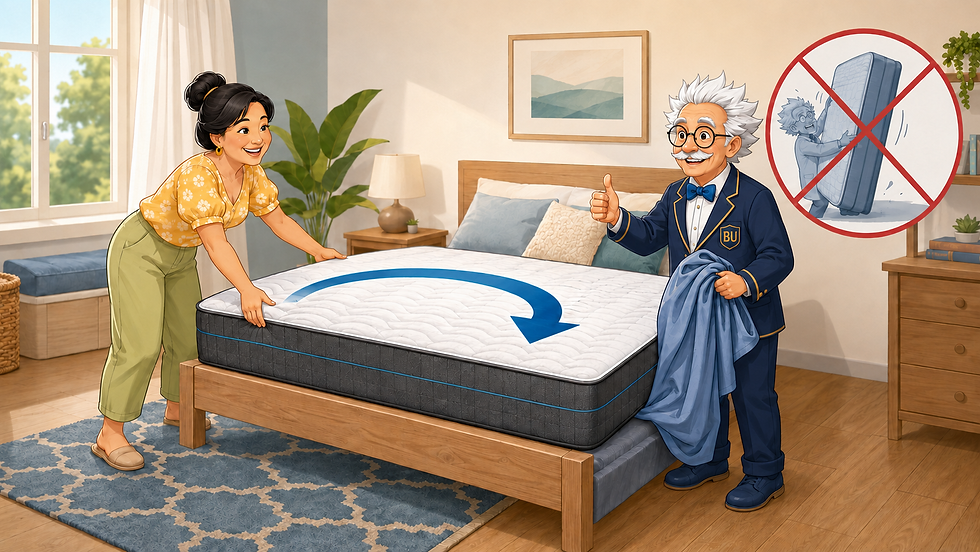
I still recommend rotating many mattresses when the manufacturer allows it. Rotating means turning the mattress 180 degrees so the head becomes the foot while the sleeping surface remains on top. That can help distribute wear caused by body weight, preferred sleeping positions, and repeatedly sitting on the same edge.
Flipping means turning the entire mattress upside down. Do that only when the manufacturer specifically designed and labeled both sides for sleeping. Flipping a one-sided hybrid or memory-foam mattress may leave you lying directly over its support core and can damage materials or violate care instructions.
Maintenance | What It Means | My Recommendation |
Rotate | Turn the head of the mattress to the foot | Often useful when permitted by the manufacturer |
Flip | Turn the mattress completely upside down | Only for mattresses intentionally built with two sleep surfaces |
Change firmness | Use the opposite side of a dual-firmness mattress | Useful only when the second comfort level solves a real need |
Professional fitting | Choose the correct feel and construction before buying | The best starting point for a primary mattress |
When a Flippable Mattress Can Still Make Sense
A Guest Room
A guest mattress serves different people with different preferences. Having a soft side and a firm side can provide flexibility, assuming someone is willing and able to flip it between guests.
A Child or Teenager
A child’s body and comfort needs can change substantially. Some youth mattresses use different sides for different developmental stages. These beds are also smaller and lighter, which makes flipping much more realistic.
Two Firmness Levels for an Uncertain Online Buyer
Current products such as the Layla Hybrid, Brooklyn Bedding Plank models, and Saatva Zenhaven use two sides to provide different firmness choices. That can reduce the risk for someone buying without trying the mattress. Layla offers soft and firm surfaces, Brooklyn Bedding’s Plank line focuses on firm and extra-firm feels, and Zenhaven combines Luxury Plush and Gentle Firm latex sides.
I understand the appeal, but I still see it as a backup plan rather than a substitute for fitting. If you need pressure relief for shoulder pain, the answer is not simply “try the soft side.” The material quality, responsiveness, support system, body weight, and thickness of the comfort layer all matter.
Temporary Changes in Comfort Needs
Recovery from an injury, pregnancy, or another meaningful physical change could make a second comfort level useful. That is a real use case, but it is different from assuming every sleeper should routinely alternate between two firmnesses.
A Thin, Firm, Symmetrical Mattress
Two-sided construction remains most practical when the mattress is relatively thin, firm, and lightly cushioned. There is less duplicate foam, less total weight, and less difference between the upper and lower structures. That resembles the older design philosophy more closely than a 14-inch plush hybrid with deep comfort layers on both sides.
What Current Flippable-Mattress Marketing Actually Says
It is important not to argue against a claim companies are not making. Reputable brands generally do not promise that a flippable mattress will last exactly twice as long. The current messages are more measured: improved longevity, more even wear, or two comfort choices in one mattress.
Those are claims worth evaluating honestly. A well-built two-sided mattress can be durable. A dual-firmness design can also be useful. My objection is to treating “flippable” as proof of superior construction without examining the materials, weight, comfort depth, and whether the second side will ever be used.
Foam density, latex quality, coil design, body weight, foundation support, and the suitability of the chosen firmness will tell me more than the ability to turn the mattress upside down.
Professor Goodsleep’s Verdict
For most modern primary mattresses, flippable construction has gone the way of the VCR and the television set that required three people to carry it. It once solved a more common problem in a different kind of sleep system. Mattress design moved forward, and most shoppers are better served by a purpose-built support core with the correct comfort materials placed above it.
I would not reject a mattress merely because it is flippable. I would reject the idea that flippability automatically makes it better. If the materials are high quality, the weight is manageable, and both sides solve a need you can clearly explain, it may be a reasonable design. If the sales pitch begins and ends with “you get two sides,” that is not enough.
My bottom line: fit the sleeper correctly first. Choose the comfort level, pressure relief, responsiveness, and support system that work for that person. Rotate the mattress when appropriate. Not everyone has the strength, mobility, help, or space to flip a mattress safely—and no one should have to buy a feature they cannot realistically use. When better modern technology provides proper support and comfort without turning the bed upside down, do not buy a 165-pound wrestling opponent just because someone revived a feature that made more sense decades ago.
Frequently Asked Questions
Do flippable mattresses last longer?
They can distribute surface wear when both sides are actually used, but flippable construction alone does not determine lifespan. Material quality, foam density, latex quality, support design, body weight, foundation, and correct firmness remain more important.
Are two-sided mattresses better?
Not automatically. They can offer two firmness choices or a symmetrical construction, but they also add material and weight. A well-built one-sided mattress fitted correctly to the sleeper can be the better choice.
Why are most modern mattresses one-sided?
Modern mattresses commonly use a directional design: a support core on the bottom, transition materials above it, and specialized comfort layers near the body. That arrangement is intended to work in one orientation.
Should I flip or rotate my mattress?
Rotate a mattress when its manufacturer recommends it. Flip it only if the mattress is explicitly designed with two sleeping surfaces. Never assume a modern hybrid or foam mattress can be turned upside down.
Who benefits most from dual firmness?
Guest rooms, growing children, uncertain online buyers, and sleepers whose needs genuinely change may benefit. Someone buying a primary mattress is usually better served by identifying the correct comfort level before purchase.
What matters more than whether a mattress is flippable?
The quality and density of the comfort materials, the support system, pressure relief, responsiveness, cooling, foundation compatibility, and whether the firmness fits your body and sleep position matter more.
Related Bedding University Guides
Sources
Don’t worry, sleep happy.
Professor Goodsleep



Comments