

How Long Should a Mattress Last? Lifespan by Type

Updated: 4 days ago
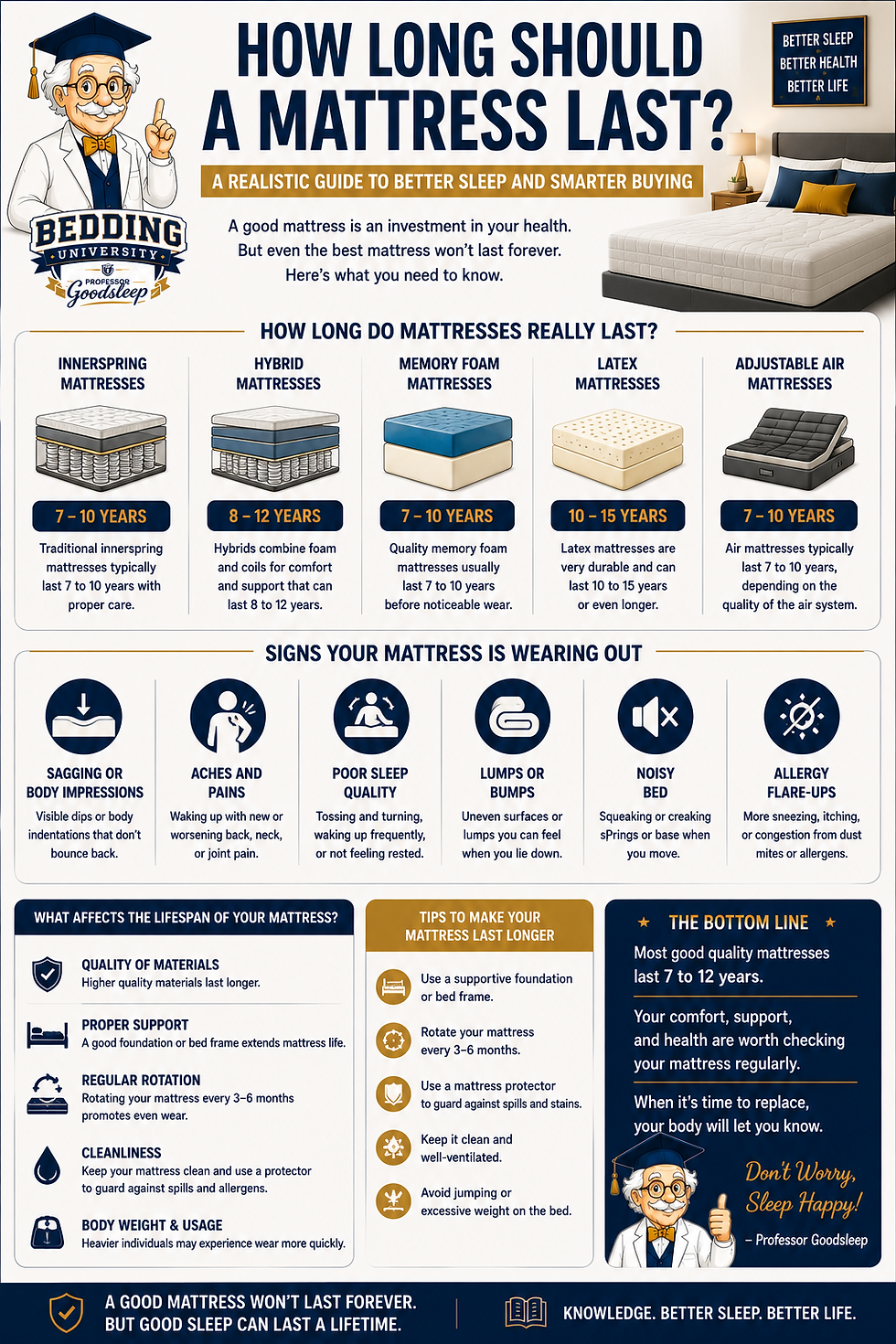
A mattress does not expire on a specific birthday. Its useful life ends when it can no longer provide consistent comfort and support for the people sleeping on it.
That distinction matters because two mattresses with the same label can age very differently. A well-built mattress on a proper foundation may perform for years longer than a lower-quality bed made from less durable materials. Body weight, nightly use, maintenance, and the foundation all affect the result.
The ranges below are practical estimates, not guarantees.
Average Mattress Lifespan by Type
Innerspring: about 5 to 8 years
Traditional innerspring mattresses depend heavily on the quality of the coil system and the upholstery above it. The springs may remain intact while the comfort layers compress, creating unevenness or pressure points. Thicker coils, stronger edge construction, and better upholstery generally improve durability.
Foam: about 6 to 10 years
“Foam mattress” covers a wide range of products. Higher-quality memory foam and polyfoam usually retain their shape and support longer than low-density foams. Premature softening is more common than a dramatic visible collapse, so a foam mattress can feel worn out even when it looks normal while no one is lying on it.
Hybrid: about 7 to 10 years
A hybrid combines a pocketed-coil support system with substantial foam or latex comfort layers. The coil unit may last well, but the overall mattress is only as durable as its least durable layer. Once the upper foams soften or develop deep impressions, the mattress can lose comfort and alignment even if the coils are still functioning.
Latex: about 10 to 15 years or longer
Latex is generally one of the most durable mattress materials. Natural latex often resists deep body impressions better than conventional polyurethane foam, but construction still matters. A latex mattress with replaceable layers may be serviceable longer because a worn comfort layer can sometimes be replaced without discarding the entire bed.
Construction Quality Matters More Than the Category
Type alone does not determine longevity. A good hybrid can outlast a poorly made latex mattress, and a strong innerspring can outperform an inexpensive foam bed.
The most important durability questions are:
How quickly will the comfort layers soften?
Is the support system appropriate for the sleepers' combined weight?
Does the mattress have enough material over the support core to prevent premature pressure points?
Is the edge reinforced well enough for how the bed will be used?
Can worn layers or components be replaced?
Marketing labels tell you what a mattress is called. The materials and construction tell you how it is likely to age.
What Shortens a Mattress's Life?
Heavier or concentrated nightly loads
More weight places more stress on foams, fibers, coils, and edge supports. Couples, larger sleepers, and people who sleep in the same position every night may notice softening sooner. This does not mean a specific body type causes a problem; it means the mattress needs to be built for the load it will carry.
An inadequate foundation
A weak frame, bowed slats, wide gaps, or missing center support can make a healthy mattress feel as though it is sagging. It can also damage the mattress over time. Always follow the manufacturer's foundation requirements, especially on queen and king sizes.
Heat, moisture, and poor airflow
Foams and adhesives age faster when they are repeatedly exposed to excessive heat or moisture. A breathable foundation, a dry room, and appropriate bedding help protect the mattress.
Sitting on the same edge
Frequently sitting in one spot can wear the edge faster than normal sleeping. If the edge is also used for getting dressed, putting on shoes, or assisting with mobility, choose a mattress with durable perimeter support.
Spills and contamination
A washable mattress protector cannot prevent normal material fatigue, but it can protect against moisture, stains, and debris. It may also help preserve warranty eligibility because many warranties exclude stained or unsanitary mattresses.
How to Help a Mattress Last Longer
Use the foundation and center support required by the manufacturer.
Rotate the mattress head to foot when the manufacturer permits it.
Do not flip a one-sided mattress.
Use a breathable, washable mattress protector.
Keep the mattress dry and allow normal airflow around it.
Check the frame and slats periodically for looseness, bowing, or broken parts.
Move the mattress according to the manufacturer's instructions rather than bending or folding it unnecessarily.
Rotation can even out normal wear, but it cannot repair foam that has already softened or a support system that has failed.
Age Is a Clue, Not the Final Decision
An older mattress that remains level, comfortable, and supportive does not need to be replaced simply because it reached an average age. A newer mattress that causes pain, has developed a deep low spot, or no longer supports you may need attention much sooner.
If you are deciding whether your current bed is still doing its job, read When Should You Replace Your Mattress? 5 Clear Warning Signs.
If the main problem is a dip or body impression, use the diagnostic steps in Mattress Sagging: When Is It Time to Replace Your Mattress? before assuming the mattress itself has failed.
The Bottom Line
Most mattresses provide roughly 5 to 15 years of useful service, depending on their materials, construction, use, and care. Treat the range for your mattress type as a planning estimate—not an expiration date and not a promise.
Judge the bed by how evenly it supports you, how consistently you sleep, and whether the materials are still performing as intended.
If you have decided it is time to compare replacement mattresses, get 3–5 mattress recommendations instantly with the free consultation. No email is required.
Bedding University is reader-supported. When you buy through links on our site, we may earn an affiliate commission at no extra cost to you.
Don't worry, sleep happy.
Professor Goodsleep



Comments