

Saatva vs. Tempur-Pedic: Which Offers Better Support?

Updated: 4 days ago
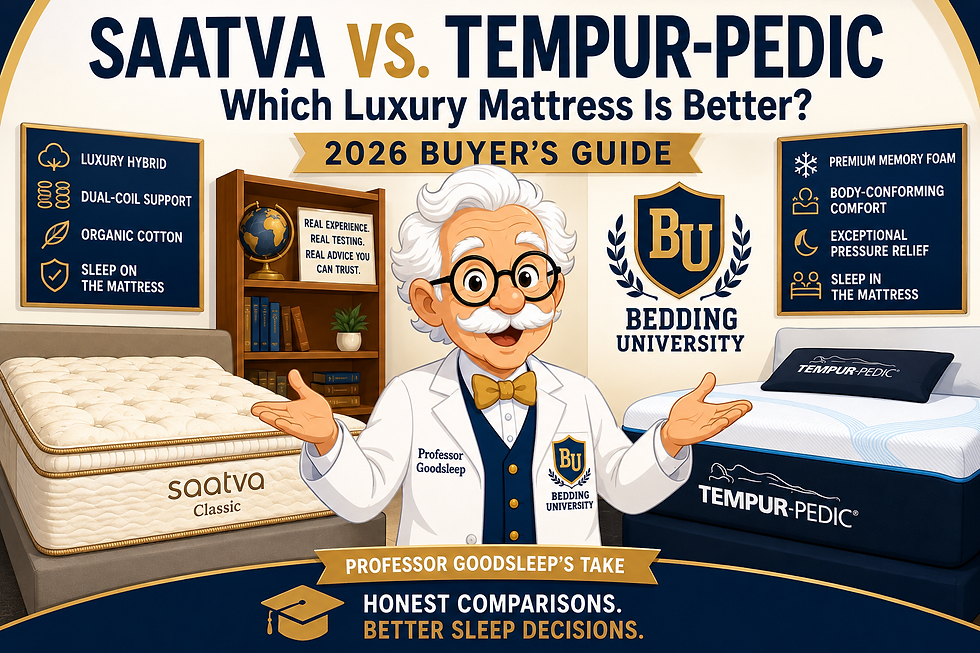
Understanding the Differences Before You Buy
Quick Verdict: Saatva or Tempur-Pedic?
Tempur-Pedic is clearly the better mattress. It has the established durability record, denser comfort materials, deeper pressure relief, and exceptional motion isolation. Saatva is only the better choice for someone who specifically wants a firmer, traditional luxury-hotel feel, easier movement, stronger edge support, and more airflow.
This is not a claim that everyone will prefer Tempur-Pedic. A shopper who feels stuck in dense memory foam should choose Saatva. But if a friend or family member liked both feels and could comfortably afford either mattress, Tempur-Pedic is the one I would recommend for overall material performance.
Still not sure which mattress fits you?
Your sleep position, body weight, pressure points and budget can change the answer. Answer a few questions and I’ll narrow more than 100 mattresses to the few I’d actually put you on.
Free • About 2 minutes
My Experience Helping Thousands of Mattress Shoppers
One reason I created Bedding University is that many review websites explain specifications but never explain what those specifications actually feel like. Over the years I've helped thousands of customers choose mattresses. The biggest lesson I learned is that people rarely buy a mattress because of the spec sheet—they buy the one that feels right to their body. I've watched customers arrive convinced they needed an ultra-firm mattress, only to discover they really needed better pressure relief. Throughout this guide, I'll combine technical construction details with practical lessons I've learned from years on the showroom floor.
Who Is Saatva?
Saatva is a luxury direct-to-consumer mattress company that emphasizes premium materials and white-glove delivery instead of shipping compressed mattresses in a box. While the company offers several mattress collections, the Saatva Classic is the model most shoppers mean when comparing it with Tempur-Pedic. The Classic combines an organic cotton cover, Euro pillow top, lumbar support foam, individually wrapped comfort coils, and a second layer of tempered steel support coils to create a responsive luxury-hybrid feel.
Why People Compare Saatva and Tempur-Pedic
Although these brands use different design philosophies, they compete because both target shoppers looking for premium quality. In my experience, customers are rarely comparing brands alone—they're comparing the experience of sleeping 'on' a mattress versus sleeping 'in' one. Understanding that difference makes choosing between these brands much easier.
Construction Comparison
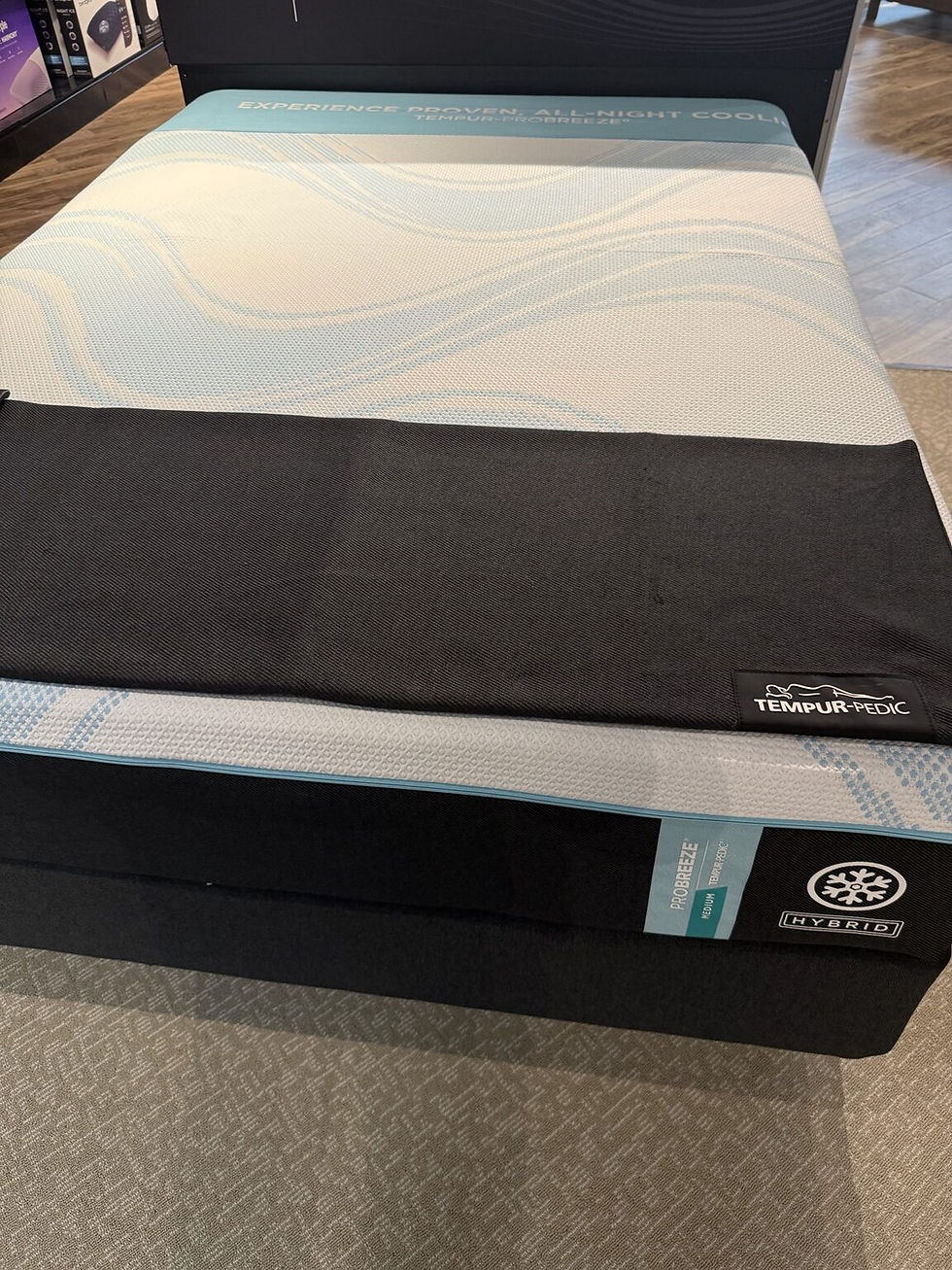
Many shoppers assume this comparison is simply memory foam versus springs. In reality, Tempur-Pedic's ProAdapt Medium Hybrid and LuxeAdapt Medium Hybrid—among its most popular models—also use individually wrapped coils. The defining difference is what sits above those coils. Tempur-Pedic uses thick layers of proprietary TEMPUR material that gradually conform as they warm. Saatva relies more heavily on its Euro pillow top and dual-coil support system to keep sleepers comfortably supported nearer the surface.
Professional Construction Comparison

Saatva Classic
Luxury Hybrid
Euro Pillow Top
Dual-Coil Support System
Excellent Edge Support
White-Glove Delivery
Tempur-Pedic ProAdapt/LuxeAdapt Hybrid
Premium Memory Foam Hybrid
TEMPUR Material Comfort Layers
Individually Wrapped Coils
Deep Body-Conforming Feel
Excellent Motion Isolation
White-Glove Delivery
Sleeping 'On' vs. Sleeping 'In' a Mattress

Mattresses differ by much more than firmness. After helping thousands of customers choose mattresses, I found that people usually preferred one of two very different experiences. Some wanted to feel supported on top of the mattress, while others wanted the mattress to gently conform around them. The Saatva Classic keeps you lifted closer to the surface with a responsive Euro pillow top and dual-coil design. Tempur-Pedic's proprietary TEMPUR material responds to body weight and body heat, gradually becoming more conforming and creating the sensation many people describe as 'melting' into the mattress.
From the Sales Floor
One of my favorite moments on the showroom floor was watching expectations change. Customers often asked for the firmest mattress because they thought firmness automatically meant better support. After discussing their sleep position and pressure points, many discovered that a Tempur-Pedic Medium Hybrid actually supported them better by allowing their shoulders and hips to sink into better alignment. Just as often, another customer would immediately say they felt 'stuck' on a Tempur-Pedic and preferred the easier movement of a responsive hybrid like the Saatva Classic. Neither preference is right or wrong—it simply reflects different comfort preferences.
Pressure Relief

Pressure relief is where Tempur-Pedic clearly separates itself. TEMPUR material gradually distributes body weight around the shoulders, hips, and lower back. Saatva’s Euro pillow top provides some initial cushioning, but in my testing even its softest choices ran on the firmer side of medium. For a side sleeper or anyone who genuinely wants softness, Tempur-Pedic offers the better path to pressure relief.
Motion Isolation
Couples should pay close attention to motion isolation. Dense TEMPUR material absorbs movement exceptionally well, reducing disturbances when one partner changes positions or gets out of bed. Saatva performs well for a hybrid, but because it relies on two coil systems, more movement can travel across the mattress than on a Tempur-Pedic.
Cooling Performance

Saatva benefits from excellent airflow through its breathable dual-coil construction and organic cotton cover. Tempur-Pedic uses advanced cooling materials to offset the naturally warmer characteristics of dense memory foam, while the Breeze collection adds additional cooling technologies for hot sleepers.
Edge Support
Strong edge support matters for sleeping near the perimeter and for everyday activities such as sitting on the edge while getting dressed. Saatva's reinforced perimeter provides outstanding stability. Tempur-Pedic hybrids also perform well, although the conforming TEMPUR material allows a little more compression when sitting directly on the edge.
Professor Goodsleep Explains
One mistake I frequently see is shoppers confusing firmness with support. A mattress can feel very firm and still fail to keep the spine aligned. Likewise, a plush mattress can provide excellent support if it keeps the body in a neutral position while relieving pressure at the shoulders and hips.
Which Mattress Fits Your Sleeping Style?

Choose Saatva if you enjoy sleeping on the mattress, like a traditional luxury hotel feel, move frequently during the night, sleep hot, or value strong edge support. Choose Tempur-Pedic if you prefer sleeping in the mattress, want exceptional pressure relief, share your bed with a partner, or enjoy a slow body-conforming feel.
Which Mattress Is More Likely to Last?
This is one of the questions I was asked almost every day while helping customers shop for a new mattress.
Most people assume that because two mattresses carry similar premium price tags, they’ll age in roughly the same way. Unfortunately, that isn’t always true.
Every mattress changes over time. The real question isn’t if it will change, but how it changes—and how long it continues to provide the comfort and support you purchased it for.
One thing I noticed after helping thousands of mattress shoppers is that the support system itself usually isn’t the first thing to wear out. Today’s individually wrapped coil systems are remarkably durable. Instead, the comfort layers above the coils almost always determine how a mattress feels five, seven, or even ten years later.
That’s why I spend so much time talking about the materials above the support core instead of focusing only on the springs underneath.
From the Sales Floor
Over the years, one conversation repeated itself more than almost any other. A customer would walk into the showroom frustrated. They’d tell me, “My mattress is only six years old, but it’s sagging.”
After asking a few questions, I usually discovered something interesting. Most weren’t actually seeing a deep permanent impression in the mattress. Instead, they’d say: “When I lie down, my hips sink much farther than they used to.” Or: “I wake up with back pain now, even though the mattress still looks okay.”
Many mattresses don’t fail because the springs collapse. They fail because the comfort materials gradually soften. As those upper layers lose resilience, your body sinks farther into the mattress than it did when it was new. Your spine may no longer stay in a neutral position, even though the mattress still appears perfectly flat when no one is lying on it.
Why Many Sagging Mattresses Aren’t Covered Under Warranty
Most mattress warranties don’t guarantee that your mattress will remain just as comfortable for ten years. Instead, they typically protect against manufacturing defects and excessive permanent body impressions.
Years ago, I watched numerous customers begin the warranty process believing their mattress would easily qualify for replacement. Unfortunately, many discovered that wasn’t the case.
Manufacturers often place a straightedge—or even a weighted string—across the mattress while nobody is lying on it. If the permanent indentation doesn’t exceed the warranty threshold, the claim may be denied.
A mattress can feel dramatically different while you’re on it even though it looks almost unchanged afterward because comfort foams often soften long before they develop a visible impression.
Why Foam Density Matters

Many people confuse density with firmness, but they’re completely different. Density refers to how much material exists within the foam itself.
Higher-density foams generally maintain their feel longer, resist premature softening, better support heavier body regions, and provide more consistent long-term performance. Construction quality and foam chemistry also matter, but higher-quality comfort materials usually translate into longer-lasting comfort.
Why Tempur-Pedic Has Built Such a Strong Reputation
Tempur-Pedic’s proprietary TEMPUR material responds gradually to both body weight and body heat, producing its signature pressure-relieving feel. I’ve known customers who slept comfortably on older Tempur-Pedic mattresses for well over a decade. Every mattress eventually changes, but Tempur-Pedic has built its reputation on high-quality comfort materials.
Where Saatva Excels
Saatva takes a different approach, combining a Euro pillow top with two separate coil systems. The result is a more responsive mattress that’s easier to move around on while maintaining a traditional luxury hotel feel.
Saatva’s Biggest Weakness: No True Soft Mattress
As someone who personally prefers a softer mattress, I could not find a Saatva model that felt genuinely soft—or even like a true medium. The models labeled “soft” felt slightly firmer than medium on my Real Firmness scale, and most of the remaining lineup felt cushion-firm or firm.
That is a major disconnect between the marketing label and the real feel. Saatva officially rates its Plush Soft Classic as soft, but my firsthand testing did not support that description. The surface has cushioning, yet the underlying feel remains noticeably firmer and keeps the sleeper close to the top.
Whether this firmer lineup is intended to appeal to heavier sleepers or people who prefer stronger pushback, the practical result is the same: Saatva does not give a genuinely soft-mattress shopper enough range. Tempur-Pedic offers a much better route for someone who needs deeper contouring and pressure relief.
Adjustable Bases
Both brands work very well with adjustable bases. Tempur-Pedic Hybrid models flex exceptionally well, while Saatva-compatible models also maintain excellent support in adjustable positions.
Best Mattress by Body Weight

Body weight changes how every mattress feels. Heavier sleepers compress comfort materials more deeply, while lighter sleepers often perceive the same mattress as firmer. Body type matters just as much as firmness ratings.
Common Shopping Mistakes I See Again and Again
Buying by firmness alone.
Assuming the most expensive mattress is automatically better.
Ignoring sleeping position.
Believing the warranty guarantees long-term comfort when it generally covers manufacturing defects rather than gradual comfort changes.
Which Mattress Is Better for Side Sleepers?
Tempur-Pedic is the better choice for most side sleepers because the material gradually allows the shoulder and hip to settle while redistributing pressure. Saatva’s lineup skews much firmer than its labels suggest, so I would be cautious recommending it to a side sleeper seeking a genuinely soft or even true-medium feel.
Mattress Recommendations
Tempur-Pedic: TEMPUR material gradually conforms to the body, distributing weight and reducing pressure points.
Saatva: Even the Plush Soft felt slightly firmer than medium in Professor Goodsleep's testing, so it is not the choice for a side sleeper seeking genuine softness.
Back Sleepers
Tempur-Pedic adapts well to the lumbar curve, while Saatva's dual-coil design provides a flatter, supportive surface many back sleepers enjoy.
Stomach Sleepers
Firmer versions of either brand generally work best by preventing excessive hip sink. Body weight remains an important factor.
Combination Sleepers
Saatva is easier to move around on thanks to its responsive coils, while Tempur-Pedic prioritizes pressure relief over mobility.
Couples
Tempur-Pedic excels in motion isolation, while Saatva generally offers stronger edge support. Both offer effective cooling, though Tempur-Pedic Breeze and Saatva achieve it differently.
Frequently Asked Questions
Is Tempur-Pedic worth the extra money? Yes, when the sleeper values deep contouring, exceptional motion isolation, and Tempur-Pedic's stronger long-term material reputation.
Does Saatva last as long? Both are premium mattresses, but Tempur-Pedic gives me greater confidence in the long-term performance of the comfort materials.
Which feels softer? Despite its name, Saatva Plush Soft felt slightly firmer than medium in Professor Goodsleep's testing. Tempur-Pedic feels denser at first but gradually melts in and provides deeper pressure relief.
Which is easier to move on? Saatva.
Which is better for hot sleepers? Saatva has the structural airflow advantage; TEMPUR-Breeze is the specialized Tempur-Pedic choice for hot sleepers.
Professor Goodsleep's Final Recommendation

Tempur-Pedic is clearly the better mattress and my overall recommendation. Choose it for proven durability, dense comfort materials, deep pressure relief, and exceptional motion isolation. Choose Saatva only when you specifically want a firmer, traditional, easier-moving surface with more airflow and a stable edge.
Saatva is not a lesser imitation of Tempur-Pedic; it solves a different comfort preference. But when both feels work for the sleeper and price is not the deciding factor, I give Tempur-Pedic the edge.
Not sure which mattress truly fits your body, sleep position, comfort preferences, and budget? Start with the Professional Mattress Consultation first.
If you already know which brand fits you, check current pricing below. Affiliate disclosure: Bedding University may earn a commission from qualifying purchases at no extra cost to you.
Final Scorecard
Pressure Relief: Tempur-Pedic
Motion Isolation: Tempur-Pedic
Ease of Movement: Saatva
Traditional Mattress Feel: Saatva
Deep Memory Foam Feel: Tempur-Pedic
Edge Support: Saatva
Luxury Hotel Feel: Saatva
Body Contouring: Tempur-Pedic
Adjustable Base Compatibility: Tie
Overall Recommendation: Tempur-Pedic; Saatva only if you specifically prefer a firmer, traditional, easier-moving feel

Don't Worry, Sleep Happy.
— Professor Goodsleep



Comments