

Serta iComfort vs. Tempur-Pedic (2026): Counting Sheep or Sleep You Can Count On?

Updated: 4 days ago

Serta iComfort vs. Tempur-Pedic looks like a straightforward memory-foam comparison, but the current product lines make it more complicated. Serta now sells both the traditional all-foam iComfort collection and the more responsive, latex-based iComfortPro collection. Tempur-Pedic remains its own category because TEMPUR material feels and responds differently from conventional memory foam.

I sold both Serta iComfort and Tempur-Pedic for years and watched shoppers compare them side by side. That firsthand experience matters because the biggest differences are not obvious from a feature list. You feel them in how slowly the mattress adapts, how completely it relieves pressure, and how substantial the comfort layers feel after you have been lying down for several minutes.
Quick Verdict: Serta iComfort or Tempur-Pedic?
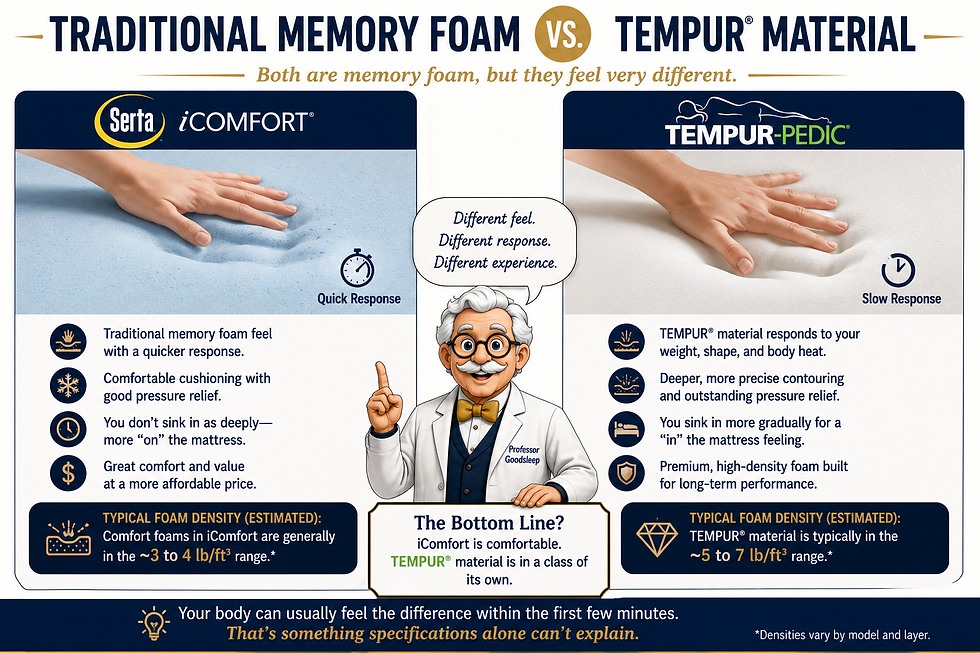
Tempur-Pedic is the better mattress, and it is my clear recommendation when the budget allows. Serta iComfort uses a softer, less-dense foam that lets you sink in immediately and can create a stronger first impression during a short showroom test. Tempur-Pedic initially feels denser and firmer, then slowly melts around the body as weight and heat activate the material. That slower adaptation ultimately provides better support, pressure relief, and durability.
The important exception is iComfortPro: that collection uses latex foam and feels quicker, springier, and easier to move on. It may suit someone who dislikes the slow TEMPUR feel, but it is not a lower-cost version of Tempur-Pedic. It is a different type of mattress.
Still not sure which mattress fits you?
Your sleep position, body weight, pressure points and budget can change the answer. Answer a few questions and I’ll narrow more than 100 mattresses to the few I’d actually put you on.
Free • About 2 minutes
What Does “iComfort” Mean in 2026?
This distinction is essential because shoppers may use the iComfort name for two very different Serta collections.
• Serta iComfort: an all-foam memory-foam collection with five support zones, a cool-to-the-touch cover, and several firmness and comfort upgrades. This is the true direct comparison to Tempur-Pedic.
• Serta iComfortPro: a zoned, all-foam collection built with professional-grade latex foam. Latex responds immediately and pushes back more than memory foam, so this line should be compared by feel and sleep need—not treated as a Tempur substitute.
If you want the slow, conforming sensation associated with memory foam, compare the regular iComfort with TEMPUR-Adapt or TEMPUR-ProAdapt. If you want buoyancy, easier movement, and a more responsive surface, iComfortPro may be more appropriate even though the word iComfort appears in both names.
The Closest Model Comparisons
• Standard Serta iComfort vs. TEMPUR-Adapt: the entry-level comparison. Serta is usually much less expensive; Tempur-Pedic provides the more distinctive body-conforming feel and greater confidence in material quality.
• Enhanced iComfort vs. TEMPUR-ProAdapt: the most useful upgrade comparison. Both add pressure-relief features, but ProAdapt uses Advanced Relief material and feels noticeably denser and more adaptive.
• Top iComfort models vs. TEMPUR-LuxeAdapt: not a perfect match. LuxeAdapt adds more TEMPUR material and a more sophisticated support design. Buy it for maximum contouring and pressure relief, not because the mattress is taller or has more features on a specification sheet.
• iComfortPro vs. Tempur-Pedic: a feel decision more than a tier decision. Choose latex responsiveness from iComfortPro or slow, temperature-sensitive contouring from Tempur-Pedic.
Serta iComfort vs. Tempur-Pedic at a Glance
• Overall winner: Tempur-Pedic.
• Best lower-price option: Serta iComfort.
• Best pressure relief: Tempur-Pedic, especially ProAdapt and LuxeAdapt.
• Best motion isolation: Tempur-Pedic.
• Best for easier movement: Serta iComfortPro because latex responds faster; a Tempur-Pedic hybrid is the more responsive choice within the Tempur line.
• Best cooling choice: compare Serta’s cooling iComfort options with TEMPUR-Breeze. Standard Tempur models are not the same as the Breeze collection.
• Best for testing locally: both brands are widely available through retailers, although the models and return policies can differ by store.
The Showroom Trap: Immediate Softness vs. Slow Adaptation
Traditional iComfort uses a softer, less-dense memory foam that gives way immediately. You sink in as soon as you lie down, which can make the iComfort seem more comfortable during the first minute or two. That initial softness is appealing, but it should not be confused with the deeper support or more precise pressure relief that develops in Tempur-Pedic.
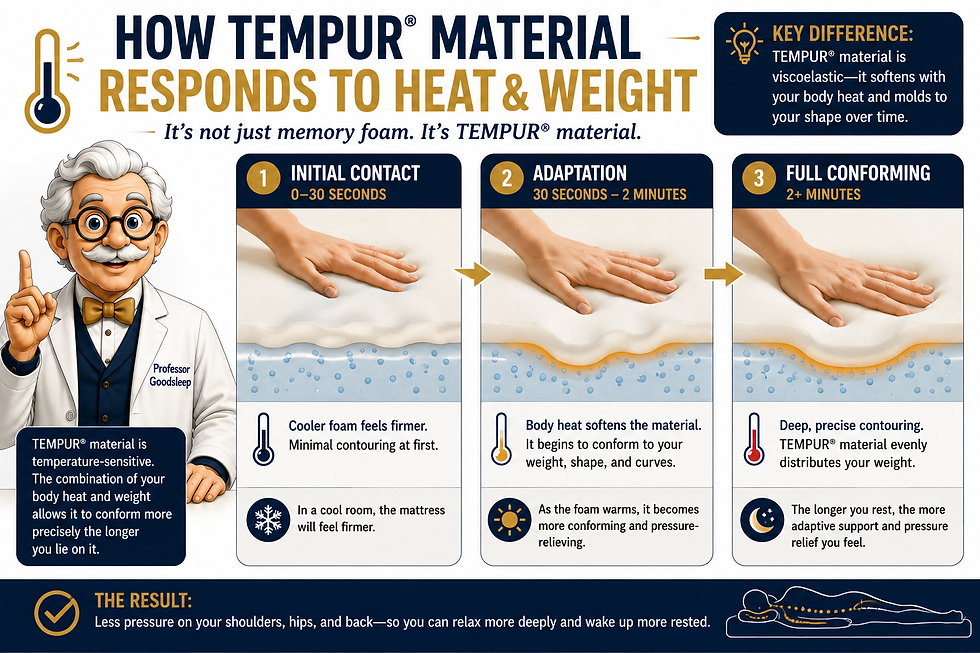
TEMPUR material reacts to body weight, shape, and temperature. It feels denser and often firmer when you first lie down, then gradually softens and allows you to melt into the mattress as your body warms the material. That delayed response is why a quick showroom test can favor the iComfort unfairly. You need several minutes in your normal sleep position to understand what the Tempur-Pedic is actually doing.
After the material has time to adapt, Tempur-Pedic conforms more precisely around the body and provides stronger pressure distribution and support. The trade-off is the deeper, slow-forming impression: some sleepers love the cradled sensation, while others feel stuck. The regular iComfort feels softer immediately and does not hold the sleeper in quite the same way. iComfortPro is different again because its latex foam provides immediate pushback.
Pressure Relief and Pain Concerns
Both regular iComfort and Tempur-Pedic can reduce pressure at the shoulders and hips. The difference is how completely the surface fills the curves of the body. Tempur-Pedic consistently felt more precise and substantial when I helped customers compare the two.
For side sleepers, people with shoulder or hip sensitivity, and sleepers who wake with pressure-point discomfort, I would start with TEMPUR-ProAdapt. LuxeAdapt adds still more conforming support for shoppers willing to pay for the extra relief. The correct firmness remains critical—a premium mattress that is too firm or too soft is still the wrong mattress.
Serta iComfort remains a legitimate lower-cost option, and its immediate softness can feel very comfortable. But softer is not automatically more pressure relieving or supportive. Tempur-Pedic’s dense material gradually spreads the load across a larger area, which is why I trust it more for significant shoulder, hip, or pressure-point concerns.
Cooling
Memory foam has to manage heat because the sleeper sinks into the surface and reduces airflow around the body. Standard iComfort models use cool-to-the-touch fabrics and cooling-focused foam upgrades, but no cover can guarantee a cold mattress all night.
Standard TEMPUR-Adapt models also use cool-to-the-touch covers, while TEMPUR-Breeze is the dedicated cooling collection. Tempur-Pedic currently positions ProBreeze as up to 5 degrees cooler and LuxeBreeze as up to 10 degrees cooler than ProAdapt under its testing conditions. Those models cost substantially more, so a shopper who only occasionally sleeps warm may not need the Breeze premium.
Motion Isolation and Couples
Both brands perform well for couples, but Tempur-Pedic wins. The dense, slow-moving material absorbs partner movement exceptionally well. That is one of the clearest reasons to justify the higher price when one sleeper is easily disturbed.
Regular all-foam iComfort also controls movement effectively. iComfortPro will feel more responsive because latex returns to shape faster, so it may transfer more surface energy than a slow memory-foam bed. Couples should decide whether motion cancellation or ease of movement matters more.
Foam Quality and Long-Term Comfort
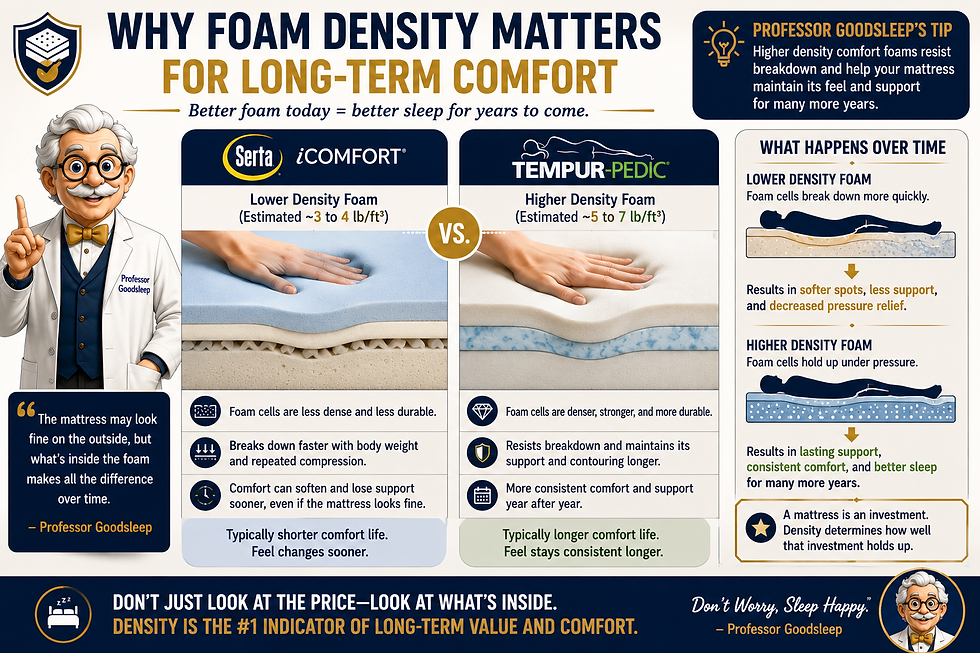
This is where Tempur-Pedic separates itself most clearly. In my experience selling both brands, iComfort’s softer, lower-density foam can lose its original comfort more quickly. The Serta line is not known for matching Tempur-Pedic’s durability. TEMPUR material feels denser, more substantial, and much better equipped to resist the early softening that changes how a mattress supports and relieves pressure.
Most mattress complaints begin before a warranty claim becomes easy. Foam can soften, lose support, or develop a comfort impression without meeting the measured indentation required for replacement. That is why I care about the quality of the comfort layers, not merely the written warranty.
Tempur-Pedic is not immune to normal softening, and no mattress lasts forever. But I would not expect iComfort to deliver the same comfort life as Tempur-Pedic. If durability and long-term pressure relief matter, Tempur-Pedic wins by a substantial margin—not a slight one.
Price, Trial, and Value
Serta wins clearly on initial price. The standard iComfort range often costs far less than Tempur-Pedic and gives the shopper an immediately soft, comfortable all-foam bed. The lower price is real, but so is the trade-off: the foam is less dense, the support and pressure relief are not as sophisticated, and I do not have the same confidence in how long the original feel will last.
When purchased directly, Serta currently advertises a 100-night sleep trial. Tempur-Pedic offers a 90-night direct-purchase trial and a 10-year limited warranty; its direct return policy may include a return fee. Retailer trial, exchange, delivery, and removal policies can differ, so compare the complete purchase terms rather than the mattress price alone.
My value rule is simple: buy the iComfort only when the savings are important enough to accept lower durability and performance. If the budget can comfortably reach Tempur-Pedic, buy the Tempur-Pedic. It costs much more, but it is not merely the same mattress with a premium name.
Who Should Buy Serta iComfort?
• Your budget is the deciding factor. The regular iComfort provides respectable memory-foam comfort for considerably less than many Tempur-Pedic models.
• You want immediate softness. iComfort lets you sink in right away and does not create the same dense, slow-melting sensation.
• You want responsive latex. Choose iComfortPro only if you specifically prefer buoyancy and easier movement over the classic Tempur feel.
• You accept the durability trade-off. A deeply discounted iComfort can be a practical purchase when lower price matters more than matching Tempur-Pedic’s long-term performance.
Who Should Buy Tempur-Pedic?
• You want the best pressure relief. TEMPUR material adapts more precisely to weight, shape, and temperature.
• You share the bed. Its motion absorption is one of the strongest advantages in the category.
• You care about durability. Tempur-Pedic is the brand I trust to maintain its defining comfort and pressure relief significantly longer than iComfort.
• You have significant shoulder or hip pressure. ProAdapt and LuxeAdapt deserve serious consideration when the correct firmness is selected.
• You want my recommendation. If the budget allows, Tempur-Pedic is the mattress I recommend over Serta iComfort.
Final Verdict
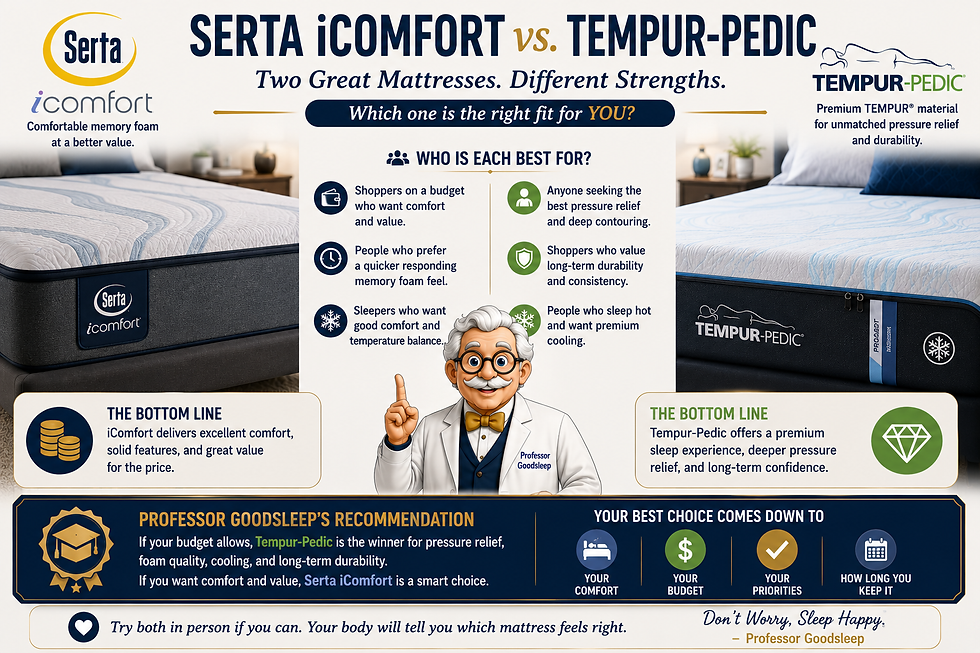
Tempur-Pedic wins this comparison clearly. Serta iComfort is much cheaper and its softer, lower-density foam can seem more comfortable during the first few minutes because you sink in immediately. iComfortPro offers a separate responsive latex alternative.
But after Tempur-Pedic has time to respond to body heat, its denser material slowly melts around the sleeper and provides the better combination of support, pressure relief, motion isolation, and durability. The iComfort is the lower-price compromise; Tempur-Pedic is the better mattress and the one I recommend.
Don’t Worry, Sleep Happy.
Professor Goodsleep
Not sure which mattress truly fits your body, sleep position, comfort preferences, and budget? Start with the Professional Mattress Consultation first.
If you already know which brand fits you, check current pricing below. Affiliate disclosure: Bedding University may earn a commission from qualifying purchases at no extra cost to you.
Related Mattress Comparisons



Comments