


WinkBed vs. Tempur-Pedic: Sleep on Top or Settle In?

Updated: 4 days ago
Quick answer: Tempur-Pedic is the better mattress when deep pressure relief, body-conforming comfort, and motion isolation matter most. WinkBed is the better value for shoppers who prefer a responsive, supportive Euro-top hybrid and want to stay under $2,000. These are not interchangeable feels, and the higher-priced choice is not automatically the better fit.
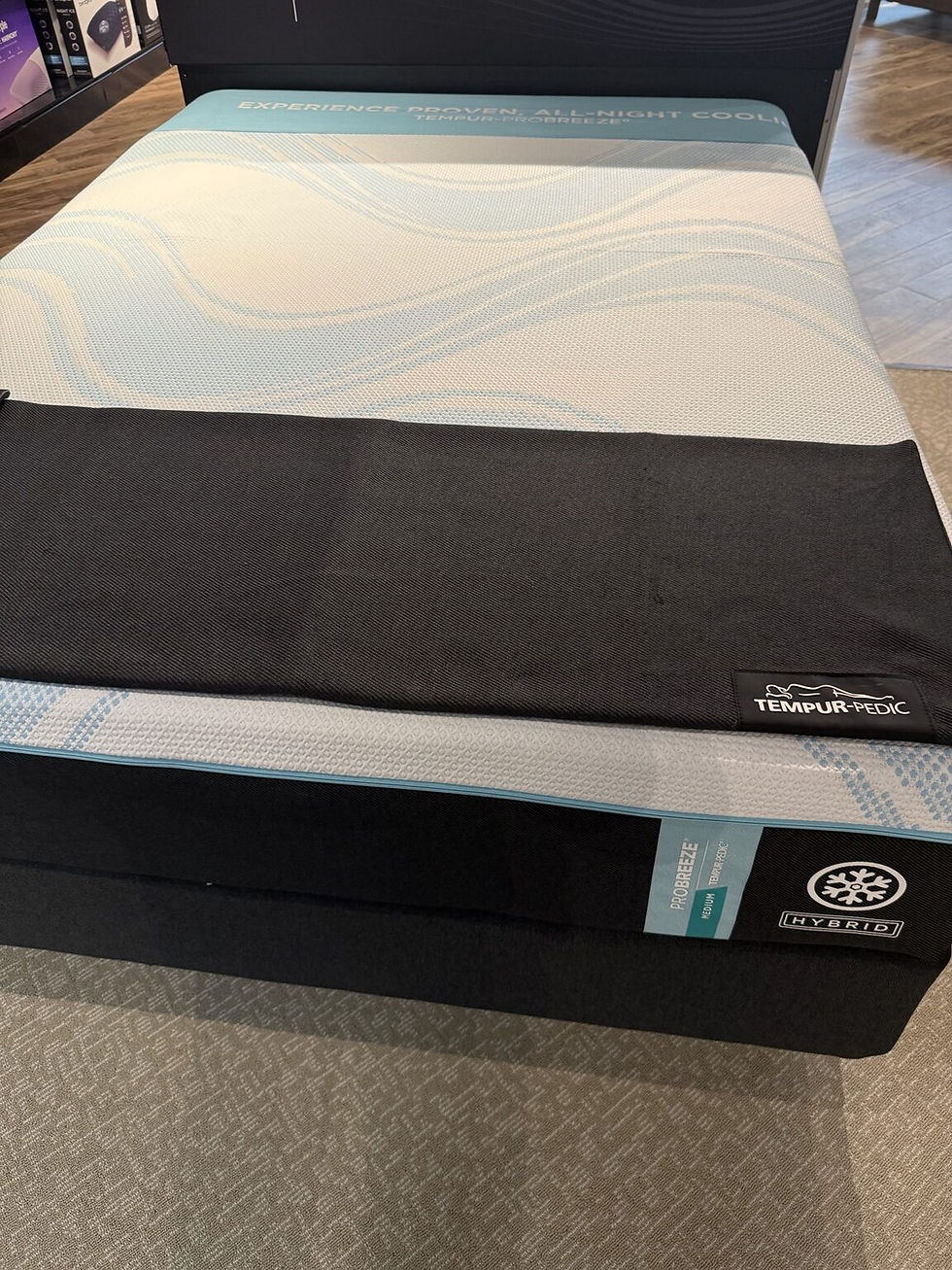

I tested all three WinkBed comfort levels in person. They felt more like substantial traditional coil mattresses than memory-foam beds: supportive, responsive, and easy to move on, with cushioning concentrated near the surface. Tempur-Pedic operates in another class for slow contouring and pressure redistribution. The decision is therefore less about which brand is universally superior and more about whether you want to sleep on top of a responsive hybrid or settle into adaptive material.

WinkBed vs. Tempur-Pedic at a Glance
Decision point | WinkBed | Tempur-Pedic |
Primary feel | Responsive Euro-top hybrid | Slow, deeply conforming foam or hybrid |
Pressure relief | Good; Softer tested 8/10 | Excellent and the clear winner |
Support | Three-zone coils; up to 9/10 in Firmer | Close adaptive support; model dependent |
Ease of movement | Quick response with little stuck feeling | Slower response; hybrids move easier |
Motion isolation | Good for a coil mattress | Excellent |
Price position | Strong value around $1,500 on sale | Premium; generally much more expensive |
The Real Difference Is How the Mattresses Respond
WinkBed compresses and recovers quickly. Its quilted Euro-top supplies the initial cushioning, while the wrapped coil unit creates the stronger sense of lift underneath. You can feel the mattress supporting you, particularly in the Luxury Firm and Firmer versions. That familiar response should appeal to sleepers coming from a well-made innerspring or hybrid.
Tempur-Pedic takes the opposite approach. TEMPUR material responds gradually to weight, shape, and temperature, spreading load across a larger area. That slow adaptation can reduce concentrated pressure at the shoulder and hip more effectively than a conventional quilt-and-coil surface. It also absorbs a partner's movement exceptionally well. The tradeoff is a more enveloping sensation and more effort when turning on some all-foam models.

Construction: Zoned Coils Versus TEMPUR Material
The current WinkBed uses a Tencel cover, a quilted Euro-top, specialty comfort foam, stabilizing foam, and a three-zone individually wrapped coil system with reinforced perimeter coils. The Softer and Luxury Firm versions use a two-inch specialty foam layer, while the amount of quilting changes by comfort level. WinkBeds does not publish the standard foam densities, so I would not pretend to know more about long-term foam durability than the company discloses.
Tempur-Pedic builds around proprietary TEMPUR material. The Adapt, ProAdapt, LuxeAdapt, and Breeze families use different combinations and amounts of adaptive material, support foam, cooling covers, and—in hybrid versions—coils. The exact model matters. A ProAdapt Medium Hybrid does not behave exactly like an all-foam LuxeAdapt or a Breeze mattress, even though all share the slow-conforming Tempur-Pedic character.
My Firsthand WinkBed Firmness Ratings
The manufacturer's labels are not useful enough by themselves. My real-firmness ratings are based on how the showroom mattresses actually felt:
WinkBed Softer: 3.8/10—really a slightly-soft Medium, not a truly soft mattress. Pressure relief 8/10, support 7/10. This is the broadest recommendation.
WinkBed Luxury Firm: 5.0/10—a genuine Cushion Firm. Pressure relief 7/10, support 8/10. Better for heavier sleepers and people prioritizing support.
WinkBed Firmer: 5.5/10—firm, but not extremely hard. Pressure relief 7/10, support 9/10. Best when stronger pushback is the priority.
All three earned an overall 9.0 after the value adjustment. Durability was scored 8/10 because the mattresses felt substantial and heavy, but the undisclosed foam densities limit how confidently anyone can predict long-term wear. Value was 9/10.
Pressure Relief: Tempur-Pedic Wins
This is the clearest category in the comparison. The Softer WinkBed did a respectable job cushioning the shoulder and hip, but it did not create the deep, evenly distributed pressure relief of a well-chosen Tempur-Pedic. The Luxury Firm and Firmer models felt progressively more supportive and less pressure-focused.
Side sleepers with significant pressure sensitivity should place Tempur-Pedic first, especially if they already know they enjoy a slow memory-foam embrace. WinkBed Softer is the practical alternative for someone who wants useful cushioning without feeling surrounded by the mattress.

Support, Edge Stability, and Movement
WinkBed's strongest performance is support. The three-zone coil system felt especially convincing in the Firmer model, and edge support scored 9/10 during my sitting test. The surface resets quickly when you roll over, which reduces the stuck feeling that some sleepers experience on dense foam.
Tempur-Pedic supports by allowing the material to form around the body rather than pushing back as quickly. That can be excellent for alignment when the firmness is correct, but shoppers with limited mobility should test whether the deeper contour makes turning or getting out of bed harder. Tempur-Pedic hybrids generally improve movement and edge confidence compared with the slowest all-foam choices.
Motion Isolation and Cooling
Tempur-Pedic wins motion isolation. Dense adaptive foam absorbs movement before it travels across the bed, making it one of the strongest options for light sleepers sharing a mattress. WinkBed's individually wrapped coils control motion better than an old connected-coil bed, but its lively surface still transfers more energy.
Cooling requires model-level honesty. WinkBed's coil cavity encourages airflow and its Tencel surface is breathable, but I did not perform a controlled cooling test. Tempur-Pedic's Breeze collections are specifically engineered for temperature management; standard Adapt models should not be described as equivalent to Breeze simply because the cover initially feels cool.
Price and Value
WinkBed's Queen price has recently been around $1,499 during promotions, with a higher regular price. That is why the value score is so strong: you are getting a substantial Euro-top, zoned wrapped coils, reinforced edges, multiple comfort choices, compressed delivery, a home trial, and a lifetime limited warranty at a price below many showroom premium hybrids.
Tempur-Pedic pricing varies sharply by collection and promotion, but comparable ProAdapt, LuxeAdapt, and Breeze choices generally cost far more. The extra money can be justified when its unique pressure relief, motion control, or cooling system solves a real problem. It is poor value when someone buys the name but actually prefers a responsive traditional feel.

Who Should Choose WinkBed?
Shoppers trying to stay under $2,000 without accepting a flimsy mattress.
People who prefer a traditional, responsive Euro-top coil feel.
Combination sleepers and anyone who dislikes feeling stuck in memory foam.
Sleepers prioritizing zoned support and 9/10 usable edge support.
Most shoppers should begin with Softer; choose Luxury Firm or Firmer only when stronger pushback fits the body and sleep position.
Who Should Choose Tempur-Pedic?
Side sleepers and pressure-sensitive shoppers who want deeper contouring.
Couples who place maximum value on motion isolation.
People who already know they love slow-adapting TEMPUR material.
Hot sleepers willing to pay more for a dedicated Breeze model.
Shoppers who value specialized feel more than keeping the price below $2,000.
Professor Goodsleep's Verdict
Tempur-Pedic is the better mattress for pressure relief, motion absorption, and highly conforming comfort. WinkBed is the stronger value and the better recommendation for shoppers who want substantial support, a familiar coil response, easy movement, and a budget near $1,500. I would not tell a pressure-sensitive Tempur-Pedic fan that WinkBed feels the same—it does not. I would confidently recommend WinkBed to almost anyone who prefers a traditional hybrid feel and wants a lot of mattress for the money.
Affiliate disclosure: Bedding University may earn a commission from qualifying purchases at no extra cost to you. This does not affect our recommendations.
Frequently Asked Questions
Is WinkBed as pressure-relieving as Tempur-Pedic?
No. WinkBed Softer provides good cushioning, but Tempur-Pedic offers deeper, slower, and more evenly distributed pressure relief.
Which WinkBed firmness should most people choose?
The Softer model is the broadest recommendation. At 3.8/10 in my real-firmness scale, it is closer to a slightly-soft Medium than a truly soft mattress.
Which mattress is easier to move on?
WinkBed is easier to turn and reposition on because the quilted top and coils recover quickly. Tempur-Pedic hybrids are easier-moving than the slowest all-foam models.
Which mattress is better for couples?
Tempur-Pedic is better when motion isolation is the priority. WinkBed can be better when both partners value edge support, responsiveness, and easier movement.
Is Tempur-Pedic worth the higher price?
It can be when deep contouring, pressure redistribution, motion control, or Breeze cooling materially improves the fit. WinkBed is the better value when those specialized benefits are not the priority.
Sources and Testing Notes
Firsthand WinkBed showroom testing by Professor Goodsleep; current manufacturer information: https://www.winkbeds.com/pages/shop-winkbed and https://www.tempurpedic.com/shop-mattresses/
By Professor Goodsleep.
Don't Worry, Sleep Happy.



Comments