

How to Break In a New Mattress Faster—and Safely

Updated: 4 days ago
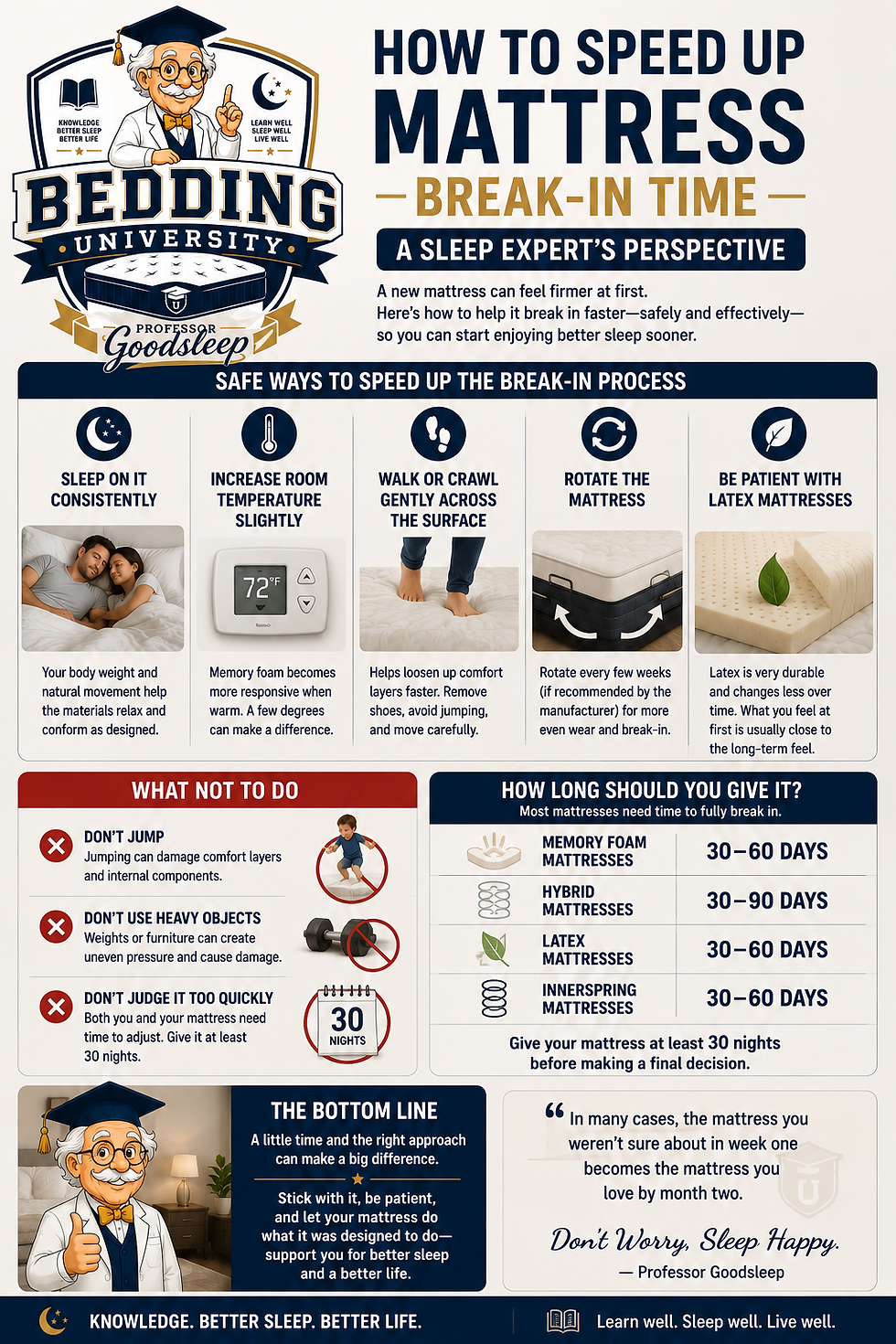
Quick Answer
A new mattress often feels firmer than the showroom model because its comfort layers have not been repeatedly compressed. Consistent use plus gentle, evenly distributed pressure can speed the initial break-in, but it cannot transform the wrong firmness into the right mattress.
Many mattresses change most noticeably during the first 30 nights. Denser memory foam, latex, room temperature, body weight, and construction all change the timeline.
Why the Showroom Mattress Felt Softer
Dozens or hundreds of people have already compressed the display model.
Showrooms are often warm, which can make some memory foams feel more responsive.
The display may have been on the floor for months.
Your new mattress may still be expanding after compression and shipping.
A different foundation can change how the same mattress feels.
How to Break In a Mattress Safely
Let it expand and reach room temperature. Follow the manufacturer's timing, particularly for a boxed mattress.
Verify the support beneath it. Wrong slat spacing or a flexible frame can create false softness, sagging, or instability.
Sleep on it consistently. Body heat and normal nightly compression are the safest break-in tools.
Apply gentle, even pressure. If the manufacturer permits it, use clean socks to walk slowly across the supported surface or press with hands and knees.
Work the entire sleeping surface. Do not concentrate all the pressure in one small area.
Reassess before the trial deadline. Give the mattress a fair chance without sacrificing the right to return or exchange it.

What Gentle Pressure Actually Does
Repeated compression can relax foam cells and reduce the unusually firm, unused feel of a new comfort layer. It may reproduce some of the early use a showroom mattress has already received. The amount of change is limited by the original design and materials.
Break-in can soften a new version of the mattress you chose. It cannot turn a firm model into a plush model.
What Not to Do
Do not jump on the mattress.
Do not use a heating pad, hair dryer, steam, or concentrated heat.
Do not bend or fold the mattress unless the manufacturer allows it.
Do not remove or wash a nonremovable cover.
Do not place the mattress on an unsupported floor or frame just to make it feel softer.
Do not wait until the final day of the trial period to admit the firmness is wrong.
Normal Break-In or the Wrong Mattress?
What You Notice | More Likely Break-In | More Likely Wrong Fit |
Firmness | Slightly firmer than the display | Far outside your preferred feel |
Pressure | Improves gradually | Severe or worsening every night |
Support | Stable while the top relaxes | Hips collapse or lower back lacks support |
Movement | Becomes easier as foam responds | Deep design keeps trapping the body |
Timeline | Steady improvement in first weeks | Little improvement near trial deadline |
Your Body Also Has an Adjustment Period
An older mattress may have developed a deep body impression or lost support. Muscles and joints adapt to that surface. A properly supportive new mattress can initially feel unfamiliar even when its firmness is reasonable. That adjustment is separate from the mattress materials softening.
Temperature and Foam Response
Some memory foams become more conforming with body heat and a warmer room. Latex and springs respond differently and may show less dramatic softening. Keep the bedroom at a normal sleeping temperature rather than trying to heat the mattress artificially.
Protect the Trial and Warranty
Review the trial's minimum-use requirements, exchange fees, protector rules, and condition requirements. Also verify the required foundation. The Mattress Warranty Guide explains why stains, inadequate support, and visible-defect rules matter.
When to Stop Waiting
Do not ignore sharp pain, severe pressure, obvious spinal misalignment, a defective surface, or symptoms that continue worsening. Contact the retailer early, document the problem, and preserve enough time to use the trial policy.
If you are still shopping, use the 10-minute mattress testing method to reduce the chance of choosing a model that needs more break-in than your body can tolerate.
Frequently Asked Questions
How long does it take to break in a new mattress?
Many mattresses change noticeably during the first 30 nights, but the timing varies by foam type, room temperature, body weight, construction, and how often the mattress is used.
Can I walk on a new mattress to soften it?
Gentle, controlled pressure can help relax the comfort layers, but only on a properly supported mattress and without jumping. Follow the manufacturer's care instructions.
Why does the showroom mattress feel softer?
A display mattress has been compressed by many shoppers and may be kept in a warmer environment. Your new mattress has not received the same repeated use.
Will a mattress that is too firm always soften enough?
No. Break-in changes the feel within a limited range; it cannot turn a genuinely firm design into a plush mattress. Track the trial deadline and do not wait past it.
Can heat speed up mattress break-in?
Normal room warmth can make some foams feel more responsive, but heating pads, steam, or concentrated heat can damage materials and should not be used to force softening.
Professor Goodsleep's Bottom Line
Use the mattress consistently, verify the foundation, and apply only controlled, even pressure. Give normal break-in time a chance—but do not let a return deadline turn patience into an expensive mistake.
If, after checking the break-in guidance and your trial terms, you decide to compare other mattresses, the free mattress consultation gives you 3–5 mattress recommendations instantly, with no email required.
Don't Worry, Sleep Happy.
Professor Goodsleep



Comments